
How much does a fursuit cost: what determines the price and how to plan your budget
Factors determining the cost of a fursuit: format, style, materials, mechanics, turnaround time, and the maker. How to avoid overpaying and where you shouldn't skimp.
- #order
- #prices
Why it is impossible to give an "average price"
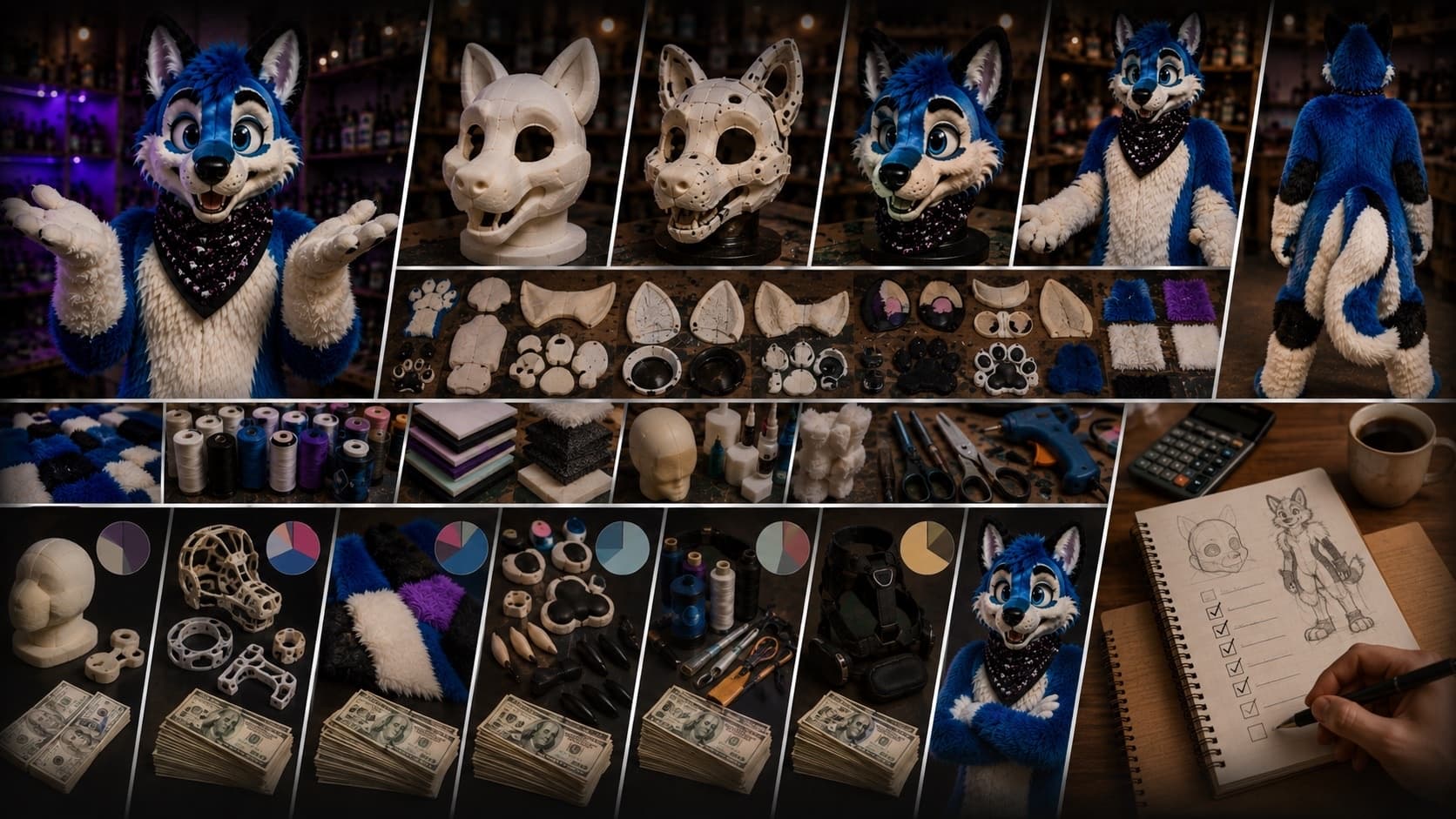
A fursuit is a unique, handcrafted item. The price of a single head can vary significantly depending on the materials used, the complexity of the design, and the number of hours required to create it. Therefore, citing "average prices" without specifying the format and style is misleading. It is more useful to understand how the price is calculated—this allows you to evaluate a maker's offer yourself.
Our workshop's current prices can be found in the Pricing section. Below, we outline the general pricing logic used by most makers.
How much effort lies behind the price
To put the scale into perspective: according to reference sources, a single suit requires over 200 hours of labor. This includes cutting and sewing the fur, fitting the suit to a "duct-tape dummy" (a body cast made of tape), assembling the head, detailing, painting, and trimming. Internationally, mid-level makers charge around $600–$1,000 for labor, while top-tier full suits cost $4,500 or more. These figures apply to the Western market and may differ significantly from the Russian market; treat them only as a rough indication of the price range.
Suit style
The main factor is the volume of work.
| Format | What is included | Relative volume |
|---|---|---|
| Head | Head only | Minimal |
| Mini-partial | Head, hand paws, tail | Small |
| Partial | Mini-partial + foot paws, sleeves, or arm covers | Medium |
| Fullsuit | Full costume, including the body | Maximum |
The formats are described in detail in the article "Types of Fursuits". Please note: the head is the most labor-intensive part relative to the amount of fur used, so it often accounts for a significant portion of the cost of the entire costume.
2. Design style and complexity
- Cartoon style is usually simpler to execute: bold shapes and a simplified face.
- Realistic style requires more work: facial anatomy, subtle fur coloring, and precise trimming.
- Complex patterns (gradients, numerous spots or stripes), unusual details (horns, wings, spikes), and non-standard species all add extra hours of work.
If the design is very complex, the maker might suggest simplifying some details. This isn't an attempt to cut corners; sometimes, a complex design simply doesn't "work" on a 3D suit.
3. Materials
- Fur. Pile length, density, quality, and color. Long-pile fur, as well as dyed fur or fur in unusual shades, costs more. Patterns may require several different types of fur.
- Head base. Carved foam, 3D-printed, or thermoformed plastic—these involve different materials and varying levels of labor. Read more in the article "Fursuit Base".
- Eyes, nose, teeth, tongue. Simple pre-made eyes are cheaper, while custom-made or transparent painted eyes cost more.
- Lining and padding, zippers, and hardware.
4. Mechanics and additional details
Any additional function is a design that needs to be designed, assembled and tested:
- movable jaw;
- ventilation system (fans in the head, mesh);
- electronics - LEDs, displays, LED eyes (typical, for example, for protogens);
- movable ears and tail, replaceable elements;
- digi legs and other overlays that change proportions.
These points are worth discussing right away: adding mechanics to a ready-made head is more difficult and expensive than putting it into the design from the very beginning.
5. Master, queue, and timelines
The price is influenced by:
- the artisan's experience and reputation: handcrafted work of recognized quality commands a higher price, and rightly so;
- workload: popular artisans often have a waiting list, and rush orders may cost more;
- working methods: the provision of a website, a contract, progress reports, and a warranty;
- custom measurements and fittings — especially for full costumes.
6. Expenses that are often overlooked
- Shipping and packaging. The costume is bulky and the headpiece is fragile, so high-quality packaging is essential.
- Accessories: collars, ornaments, and a bag or case for transport.
- Maintenance: combs and brushes for the fur, as well as cleaning and disinfecting products.
- Repair and refurbishment: every costume requires maintenance over time.
How to save money without sacrificing quality
- Order in parts. Get the head and paws now, and the rest later. Just make sure to tell the maker so the parts will fit together properly.
- Simplify the design. Fewer small markings and non-standard details mean fewer hours of work.
- Plan ahead. Rush orders cost more; having plenty of time saves money and offers peace of mind.
- Set priorities. What matters more to you—an expressive face or the body? Invest your budget where the impact is greatest.
- Compare what’s included, not just the price. The same "head price" from different makers might cover a different set of features.
What You Shouldn't Skimp On
- Comfort and safety: ventilation, visibility, and head weight.
- Quality of the base and seams: these determine the suit's longevity.
- Written agreements with the maker.
If the price is significantly below market rates, ask yourself how that cost reduction is achieved—whether through materials, labor time, or warranties. Find out more in the ordering guide.
Questions and Answers
Why are fursuits expensive? This is manual work that takes tens and hundreds of hours: you need to design the shape, select and cut the fur, sew it, assemble it, fit it. Plus materials that are not bought in regular stores.
Is it possible to make a fursuit cheaper if you do it yourself? You'll save money, but not time: the first suit usually takes many weeks and requires tools and experience. Find out where to start in our DIY guide.
Which is more expensive: realistic or cartoon fursuit? Mostly realistic: requires more work on shape and coloring. But it all depends on the specific design.
Evaluate your project
If you want to know the cost for your character, leave a request and attach a reference. We will respond with time and price. Examples of work are in portfolio.
Want a custom fursuit?
Tell us about your character — we will assess the project and name the timeline and price.