
Fursuit Fur: How to Choose, Cut, and Sew It
How to choose faux fur for a fursuit: pile length, density, pile direction, cutting, and sewing. Guidelines to help avoid ruining the fabric.
- #DIY
- #materials
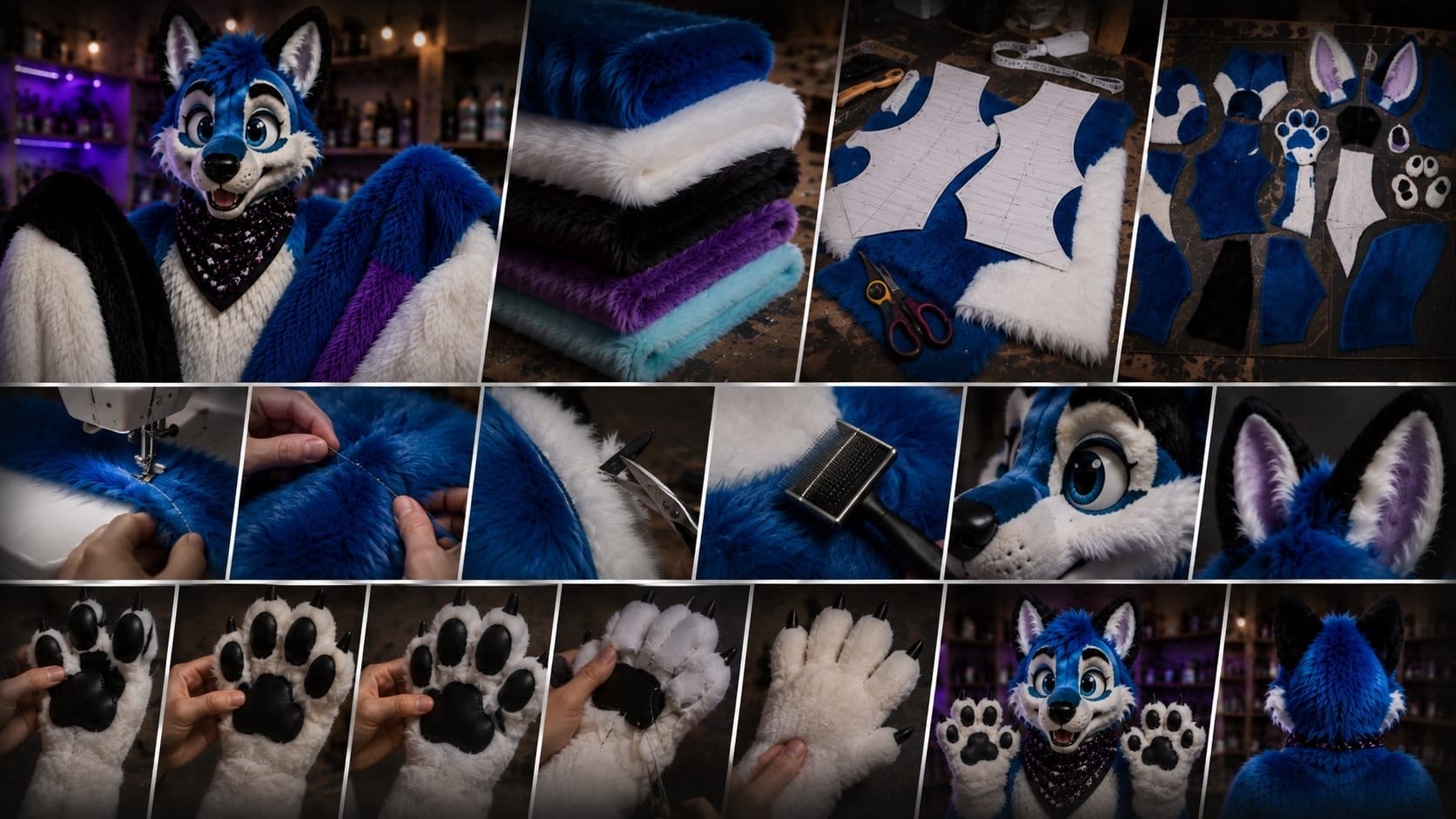
Why fur is the key material
Fur is what everyone sees. It defines the color, texture, and overall impression, and mistakes involving it are hard to fix—once the fabric is cut, there is no turning back. The primary material for fursuits is faux fur; the base and other details merely support it.
Types of fur
The main differences lie in the pile length and density.
| Type | Characteristics | Applications |
|---|---|---|
| Short pile | Smooth, dense, lies flat | Paws, details, cartoon-style costumes |
| Medium pile | Balance of fluffiness and manageability | Versatile choice for head and body |
| Long pile (shaggy/shag) | Very fluffy, striking, but difficult to work with | Wolves, foxes, large fluffy characters |
| Plush and minky | Soft, smooth fabric | Paw pads, trim/accents |
Long fur looks impressive, but it is harder to cut, sew, and maintain; it is prone to matting. Short fur is easier for beginners and holds the defined shape of a muzzle better.
What to check when choosing
- Pile density and thickness. Sparse pile reveals the backing and looks cheap.
- Backing quality. It needs to be strong enough to hold a seam but not overly stiff.
- Color uniformity. Check for shade variations between batches if you need a large amount of fur; it is best to order everything for a single costume at once.
- Pile direction. Observe how the fur looks and lies when brushed in different directions.
- Loft and weight. Heavy fur will add significant weight to the costume.
- Samples. Many sellers provide small samples—request them to see the color and texture in person, as photos on a screen can be misleading.
Pile direction
A key rule for cutting out the pieces is that they must all be laid out in the direction of the fur grain. On the body, the fur runs downwards, while on the head, it runs backwards toward the neck; this ensures it lies smoothly and naturally. Therefore, a "with-the-grain" layout is used, where the top edges of all pattern pieces point in the same direction. You can find more details on patterns in the article "Fursuit Patterns".
How to cut fur
- Cut only the backing. Cut the fur from the reverse side using the tip of sharp scissors or a craft knife, taking care not to damage the pile on the right side; otherwise, the edge will look "choppy."
- Mark the outlines on the reverse side and cut the layers individually rather than all at once.
- Pre-trim the fur with clippers in areas where less bulk is needed, as pile within the seams creates excess thickness.
How to sew fur
- Needles. Use universal or ballpoint needles, selected based on fabric thickness.
- Seam allowances. At least ½ inch (approx. 1.3 cm); narrower allowances are difficult to control. Trim the pile within the seam allowances to reduce bulk.
- Stitch length. Longer than usual for added strength.
- Keep the pile away from the seam. Push the pile away from the stitching line as you sew, pausing to adjust the fabric. Pull out any trapped fibers with a needle or pin so the seam remains virtually invisible.
- Seam finishing. Finish raw edges using hand stitching, an overlocker (serger), or a zigzag stitch.
- Do not iron. Smooth the fur with your fingers; heat and steam damage the pile.
Haircuts and care
Clipping gives the muzzle its final shape: it removes excess bulk and defines the contours. Brush the fur gently and frequently. We will cover the care of the finished costume in separate articles; for now, remember that the fur does not tolerate overheating or rough friction.
Where to buy
Fursuit fur is sold in specialized fabric stores, online faux fur shops, and on marketplaces. Check reviews, request samples, and verify the material composition and weight. You can find recommendations for trusted suppliers in fursuit-making communities.
Fur and the cost of the costume
Fur is one of the major expenses—especially long-pile, dyed, or multi-colored fur. You can find more details in the article "How Much Does a Fursuit Cost". If you’d rather not deal with sourcing materials yourself, you can order a suit—we select the fur based on your reference.
Questions and Answers
Which fur is best for a beginner? Short- or medium-pile fur: it is easier to cut and sew, and holds its shape better.
Can fur be washed? It depends on the composition and the specific item; follow the recommendations of the seller and the maker. Do not use an iron on any type of fur.
Should I buy extra fur? Yes, especially if there are many pattern pieces or the fur has a pattern: you need to account for the direction of the pile and potential cutting errors.
How does "shaggy" fur differ from standard fur? Shaggy fur is a long-pile variety—very fluffy, voluminous, and striking, but more difficult to work with.
Want a custom fursuit?
Tell us about your character — we will assess the project and name the timeline and price.