
Kemono fursuit: what this style is and how to choose one
What is a kemono fursuit, how does it differ from the cartoon and realistic style, what is it made from and what to look for when ordering.
- #types
- #styles
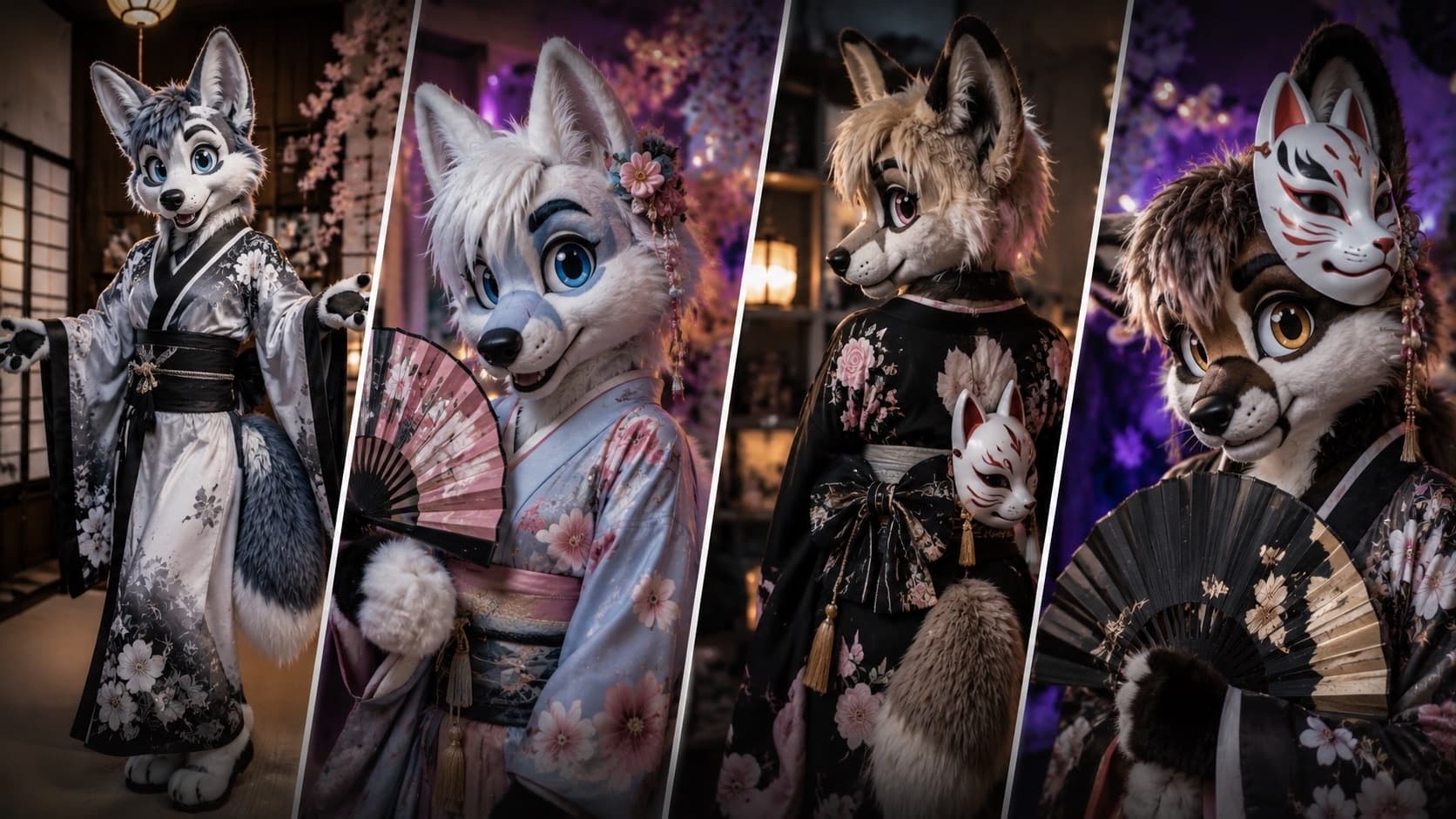
Kemono or kimono: one and the same.
The search terms "kimono fursuit" and "kemono fursuit" refer to the same style. The correct term is kemono (from the Japanese 獣, meaning "beast"), which describes the Japanese aesthetic of anthropomorphic characters. "Kimono" is a common mistake—though many people do search using that word—and has nothing to do with the traditional Japanese garment.
In this article, we use the term "kemono," but keep in mind that makers and buyers often use both variations.
How Kemono differs from other styles
Distinctive style features:
- short muzzle and anime-style eyes — unlike Western fursuits, which feature long snouts and eyes resembling those in American cartoons;
- influence of "kawaii" and "moe" styles — resulting in a cute, softened aesthetic;
- human-like hands and feet instead of paws, hooves, or claws — these are more common in Kemono characters than in Western ones;
- large, expressive eyes — often the most prominent feature of the look;
- simplified, "flat" muzzle with a small nose and short snout;
- smooth, soft shapes without excessive anatomical detail;
- anime- or manga-style facial expressions that are easily readable from a distance;
- often a recognizable, "cute" aesthetic.
Kemono is distinguished from the toony style by its specific Japanese proportions and execution, and from the realistic style by the absence of anatomical detail. An overview of all styles can be found in the article "Types of Fursuits".
Slim and other options
Various "sub-types" exist within the style. The most common is slim: featuring a slenderer muzzle and a lightweight silhouette. Since this is a general term, it is best to clarify the specific details with the artist using reference images and photos.
What are kemono fursuits made of?
A distinctive feature of the style is the head base. Due to the large facial surface area combined with relatively low volume, the following materials are commonly used:
- polyurethane foam (foam rubber) — a lightweight and flexible option;
- plastic (e.g., thermoformed);
- 3D-printed bases — offer precise shaping but are heavier;
- paper or cardboard bases — often found in DIY projects.
The pros and cons of each base type are discussed in the article “Fursuit Base”. For Kemono suits, it is important to ensure the head does not become too heavy, as large eyes and wide ears shift the center of gravity.
The fur used for Kemono suits is typically short or medium-length and features clean, solid colors. Bright details—such as blush marks, highlights, or unusual color accents—are frequently added.
How to choose a kemono fursuit
- Consider whether this specific style is right for you. It is highly expressive but not for everyone; if you want a "realistic" animal look, a realistic style is a better choice.
- Check out the artist's work. Kemono is a niche style, and it varies from artist to artist. Make sure the portfolio features exactly the kind of look you like.
- Discuss the eyes. Shape, color, highlights, and visibility are key factors. Large eyes also need to be practical: you must be able to see where you are going.
- Check the weight and ventilation. A flat face and large head require a well-designed airflow system—be sure to clarify this with the artist.
- Consider how your character adapts to the style. Not all designs translate perfectly into kemono; some details may need to be simplified.
Where to buy or order
You can get a kemono fursuit by:
- ordering one from a maker based on your own reference sheet — an option for a unique character;
- buying a ready-made one — faster, though it may rarely match your desired design or size (comparison of approaches);
- making it yourself — using tutorials and a pre-made base.
If you decide to place an order, please check out the portfolio and pricing, then submit a request along with your reference sheet.
Questions and Answers
Are kemono and kimono the same thing? When it comes to fursuits—yes; they refer to the same style. "Kemono" is the correct term.
Is the kemono style suitable for a beginner? Yes, provided you like the style. The key is to discuss head weight and ventilation beforehand.
How does kemono differ from the "toony" style? Kemono is closer to anime, featuring a simplified muzzle, large eyes, and smooth shapes. The "toony" style is broader and not tied to Japanese aesthetics.
Can a kemono suit be made using a pre-made base? Yes; many makers and hobbyists use ready-made or 3D-printed bases and then cover them with fur.
Want a custom fursuit?
Tell us about your character — we will assess the project and name the timeline and price.