
Types of Fursuits: Formats, Styles, and How to Choose Yours
We explain the differences between a head, mini-partial, partial, and fullsuit, and cover terms like digi-legs, kemono, and realistic style. We break down the various types of fursuits to help you choose the right one.
- #types
- #for beginners
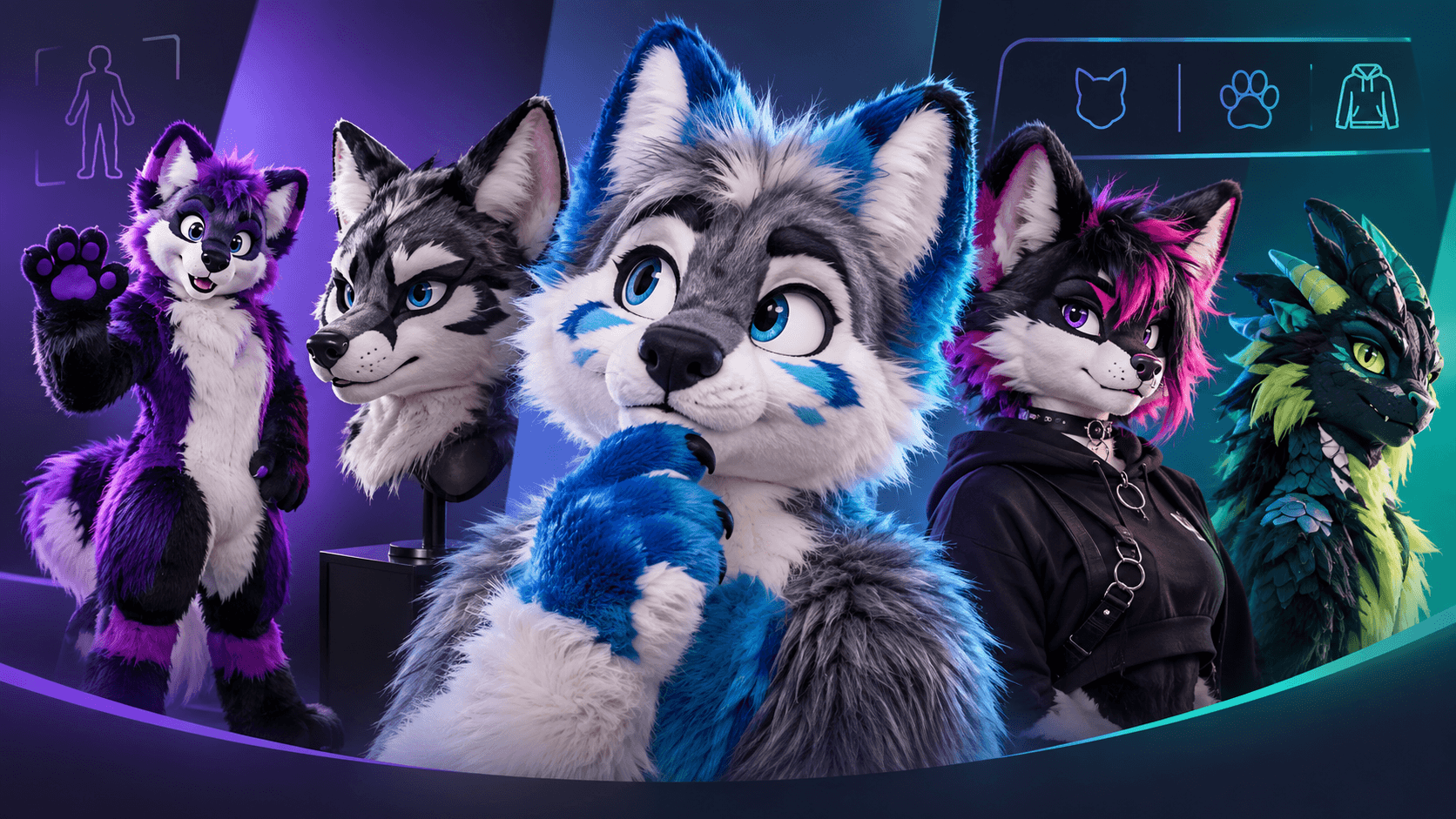
How fursuits are classified
When people speak of "types of fursuits," they usually mean three different things:
- Format — which parts of the body the suit covers.
- Style — the appearance of the head and how closely it resembles a real animal.
- Construction features — for example, digi-legs or electronics.
Let’s break down each category and then offer some advice on how to choose.
Formats: from head-only to full costume
Head
Just the head. This is the most accessible way to get into the hobby, and the face is the character's most recognizable feature. It is often worn with regular clothing or paired with accessories like ears and a tail.
Mini-partial
Includes the head, hand paws, and tail. Convenient for walks and photoshoots: the costume doesn't overheat the body, yet the character remains instantly recognizable.
Partial
A mini-partial supplemented with foot paws and, typically, arm sleeves or body sleeves. The wearer's torso remains in their own clothing—often color-coordinated with the costume. A partial is lighter and cooler than a fullsuit, making it a popular choice for comfort.
Fullsuit
A complete costume (full suit): head, body, arms, legs, paws, and tail. It offers a cohesive and impressive look but is the heaviest and hottest option, as well as the most expensive in terms of labor and cost.
Three-quarter
An intermediate format: the costume covers either the torso or the legs, along with the head and paws. It is a convenient choice when a compromise between a partial and a fullsuit is needed.
Quadsuit
A costume designed for moving on all fours; it features a specialized construction and arm extensions that serve as front legs. This is the most expensive and complex format to create; it is rarer and requires specific training to use.
Styles: what the front end looks like
| Style | Features |
|---|---|
| Toony | Large, expressive eyes; simplified shapes; vivid facial expressions. Highly readable from a distance. |
| Semi-realistic | A happy medium: recognizable animal features combined with expressive styling. |
| Realistic | Anatomy closely resembles a real animal; detailed muzzle and markings. |
| Kemono | Japanese style: flat muzzle, large eyes, lightweight forms. Read more in this separate article. |
The toony style is often simpler and easier to read from a distance. The realistic style looks impressive but requires more work on shaping and markings—which is reflected in the price (read more).
Design features
- Plantigrade vs. Digitigrade. Plantigrade legs mimic the human foot. Digitigrade legs replicate an animal-like stance, featuring a raised heel and a reverse-bending knee. This is achieved by integrating padding or a specialized internal structure into the suit; while visually striking, it is more complex to manufacture and walk in.
- Moving jaw. This makes facial expressions more lifelike but adds mechanical complexity and requires careful maintenance. See our article on head mechanics for more details.
- Electronics. Glowing eyes, displays, and LEDs. A classic example is the Protogen.
- Ventilation. Fans and mesh vents in the head help manage heat; it is recommended to discuss this when placing an order.
Popular types and characters
- Protogen — a futuristic species featuring a visor-style screen.
- Raptor — a species often created using pre-made masks as a base.
- Skull-dog and "Toothy" (Zubastik) — stylized species with expressive muzzles.
- Classic animals: fox, wolf, cat, dog, dragon, and others.
We will cover each species in greater detail as the materials become available.
How to choose the right option for you
- Define your goal. Do you need the suit for conventions, photoshoots, casual outings, or just for yourself?
- Consider your budget. A head and mini-partial are more affordable; a fullsuit is an investment.
- Factor in climate and comfort. The more of your body that is covered, the hotter it will be.
- Think about the style. A toony style is easier to read visually and often more comfortable; a realistic style is more impressive up close.
- Decide on essential details. Discuss features like a moving jaw, digitigrade legs, or electronics beforehand.
- Don't be afraid to start small. Get the head and paws now—the rest can come later.
Questions and Answers
How does a partial suit differ from a fullsuit? A partial suit does not cover the entire body; it typically consists of a head, paws, a tail, and sometimes arm sleeves. A fullsuit is a costume that covers the whole body.
What is a "headcase"? This term refers to the head piece when worn separately, without the rest of the suit. In conversation, it is usually just called a "head."
Which fursuit is best for a beginner? It depends on your goals and budget. Many people start with just the head or a mini-partial: these are less expensive, and the experience of wearing them will be useful later on.
The next step
Once you’ve chosen the format, you can order a fursuit or view the prices and portfolio. If you’re unsure, submit a request, and we’ll help you decide.
Want a custom fursuit?
Tell us about your character — we will assess the project and name the timeline and price.