
Foam Fursuit: Which Foam to Choose, How to Glue and Cut It
How to make a fursuit out of foam: which polyurethane foam to use, what adhesives to use, and how to carve the head, paws, and padding. Pros, cons, and safety considerations.
- #DIY
- #materials
Why polyurethane foam is the primary material
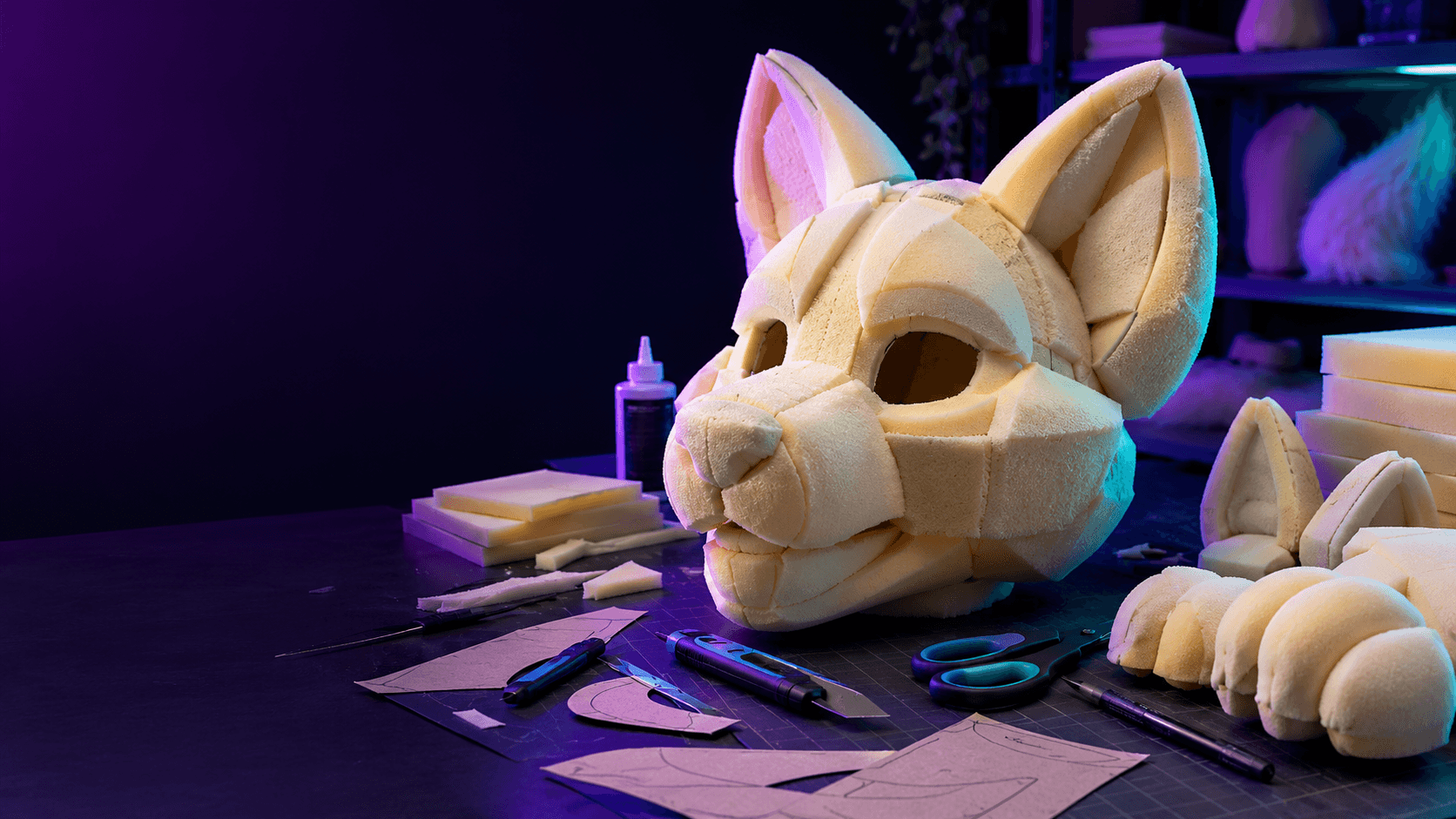
Most modern fursuit heads are built on furniture polyurethane foam (foam rubber) of medium and high density: it is light, easy to cut and holds its shape well under the fur. Foam rubber is used not only for the head, but also for paws, body pads, digi-legs and tail.
Comparison with other base materials is in the article “Base for fursuit”.
Which foam to choose
- Furniture (upholstery) polyurethane foam. Suitable for most parts. Beginners are usually advised to use the soft option: it is easier to cut and shape.
- Density. The head needs sufficient rigidity so that the shape does not sag, and for the paws and pads it needs to be softer and more pliable. Modern designs combine layers of different densities: soft on the outside and harder closer to the body.
- Thickness. Sheets are about 0.5-1 inch thick and are good for ears and small parts.
Foam rubber from hardware stores varies in quality; check for elasticity and absence of crumbling areas.
What to use for gluing
- Contact adhesive — for large joints: strong and flexible.
- Hot glue — for small parts that might need repositioning.
Apply the adhesive in a well-ventilated area, as the fumes are harmful. Use a minimal amount of glue to maintain flexibility and breathability. You can lightly score the foam before bonding to improve adhesion.
How a foam head is made
- Draw and cut out the base pieces (skull, muzzle, cheeks).
- Glue the large parts together using contact cement.
- Trim and shape the form using a knife and scissors.
- Test the fit on yourself for at least 10 minutes, checking visibility, jaw clearance, and alignment.
- Create patterns for the fur and cover the base.
Find more details in the guide "How to Make a Head".
What else is made from foam rubber?
- Paws — thick foam layers on the gloves (“Paws and Gloves”).
- Tail — a central foam core shaped into a cone (“Fursuit Tail”).
- Ears — built on a foam frame (“Ears and Accessories”).
- Padding and digitigrade legs (“Digitigrade Legs”).
- Head interior padding — foam strips on the forehead and cheeks.
Pros and cons
Pros:
- lightweight;
- flexible and impact-resistant — the foam doesn't crack like rigid materials;
- easy to modify and adjust;
- inexpensive material.
Cons:
- harder to capture fine details;
- the foam can age and crumble over time;
- requires skill to cut symmetrically;
- the foam absorbs odors and moisture.
Workplace safety
- Ventilation. Work with the adhesive in a well-ventilated area.
- Protection. Wear a mask when sanding or cutting; foam and fur dust is harmful.
- Sharp tools. Cut on a flat surface and keep your hand away from the blade.
- Fire safety. Foam is flammable; do not use near open flames or heated tools unless necessary.
Who it is for
Upholstery foam is the best choice for a first project and for regular wear. If you need high detail, you might consider 3D printing, while paper and cardboard are good options for experimentation. Find out where to start in the article “DIY Fursuit”.
Questions and Answers
What kind of foam should be used for a fursuit? Medium- to high-density upholstery foam. A softer grade is easier for beginners to work with.
What adhesive should be used for the foam? Contact cement for strong bonds, and hot glue for small details.
Can a fursuit be made from foam without a sewing machine? The foam base—yes; the fur parts can be sewn by hand, though using a machine is faster.
How long does the foam last? It depends on quality and conditions; over time, it can crumble. When ordering a suit, ask the maker what material they use.
Want a custom fursuit?
Tell us about your character — we will assess the project and name the timeline and price.