
Fursuit Paws and Gloves: Types, Materials, and How to Make Them
Types of fursuit hand paws: simple, foam-padded, and "piano-style." Materials used and how paw pads and claws affect comfort.
- #DIY
- #materials
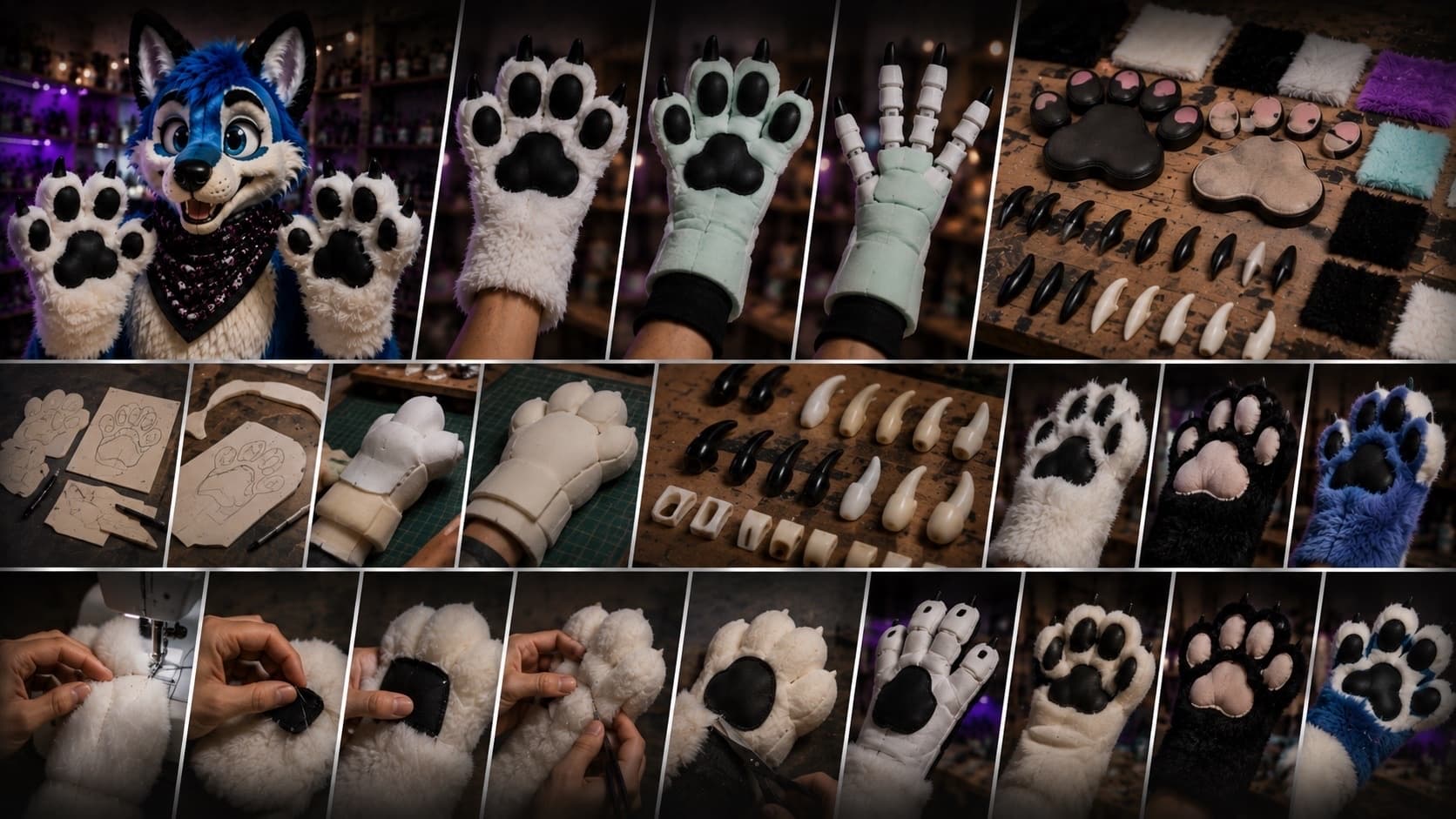
What are fursuit paws?
Paw-style gloves (known as "handpaws"—or furchatki and lapki in the Russian-speaking community) are worn on the hands instead of regular gloves. They visually transform human hands into animal paws and are included with almost any costume, ranging from a mini-partial to a fullsuit.
The key to a good pair of paws is balancing appearance with comfort: the wearer needs to be able to hold a phone, open doors, and use hand gestures while wearing them.
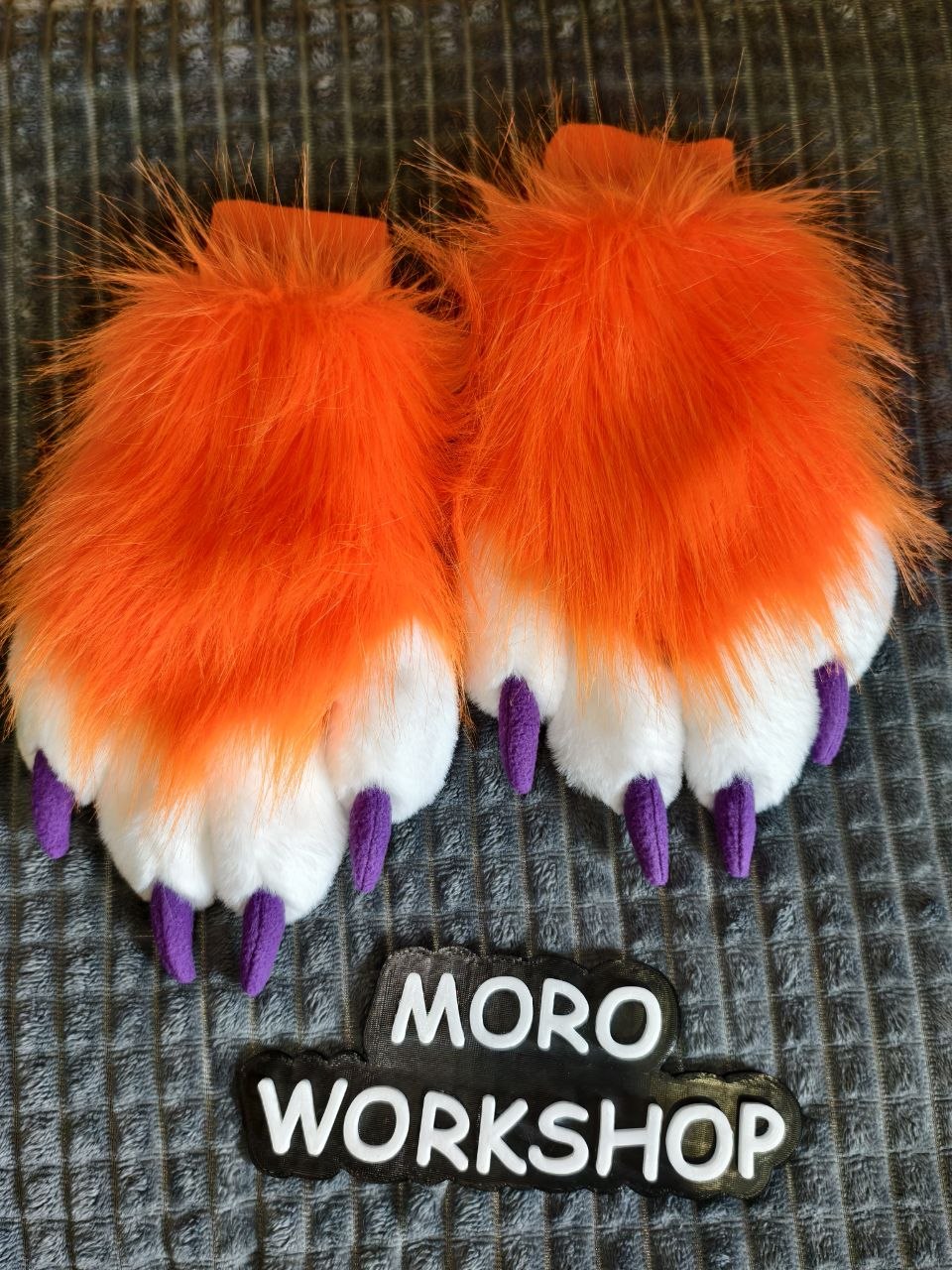
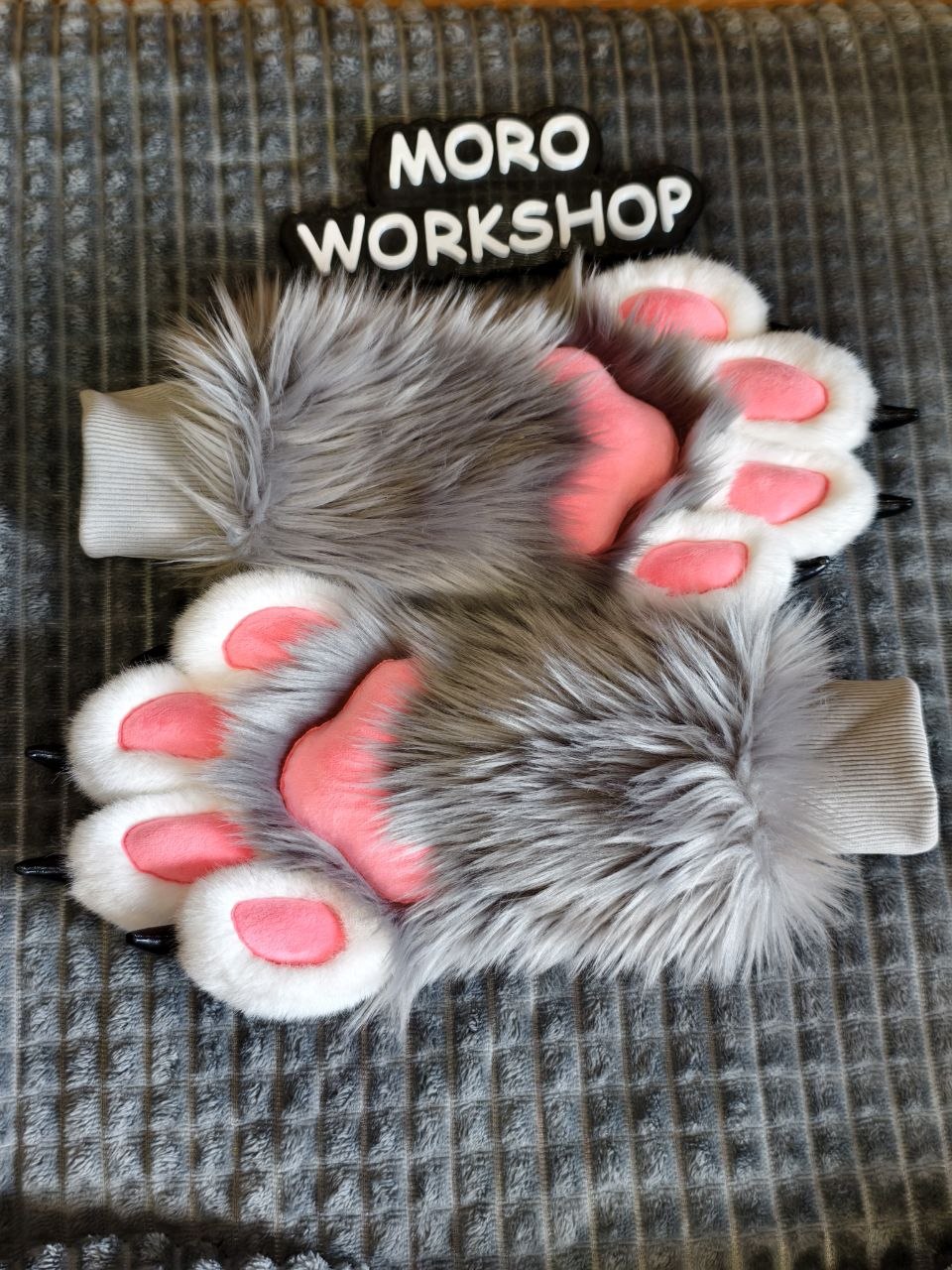
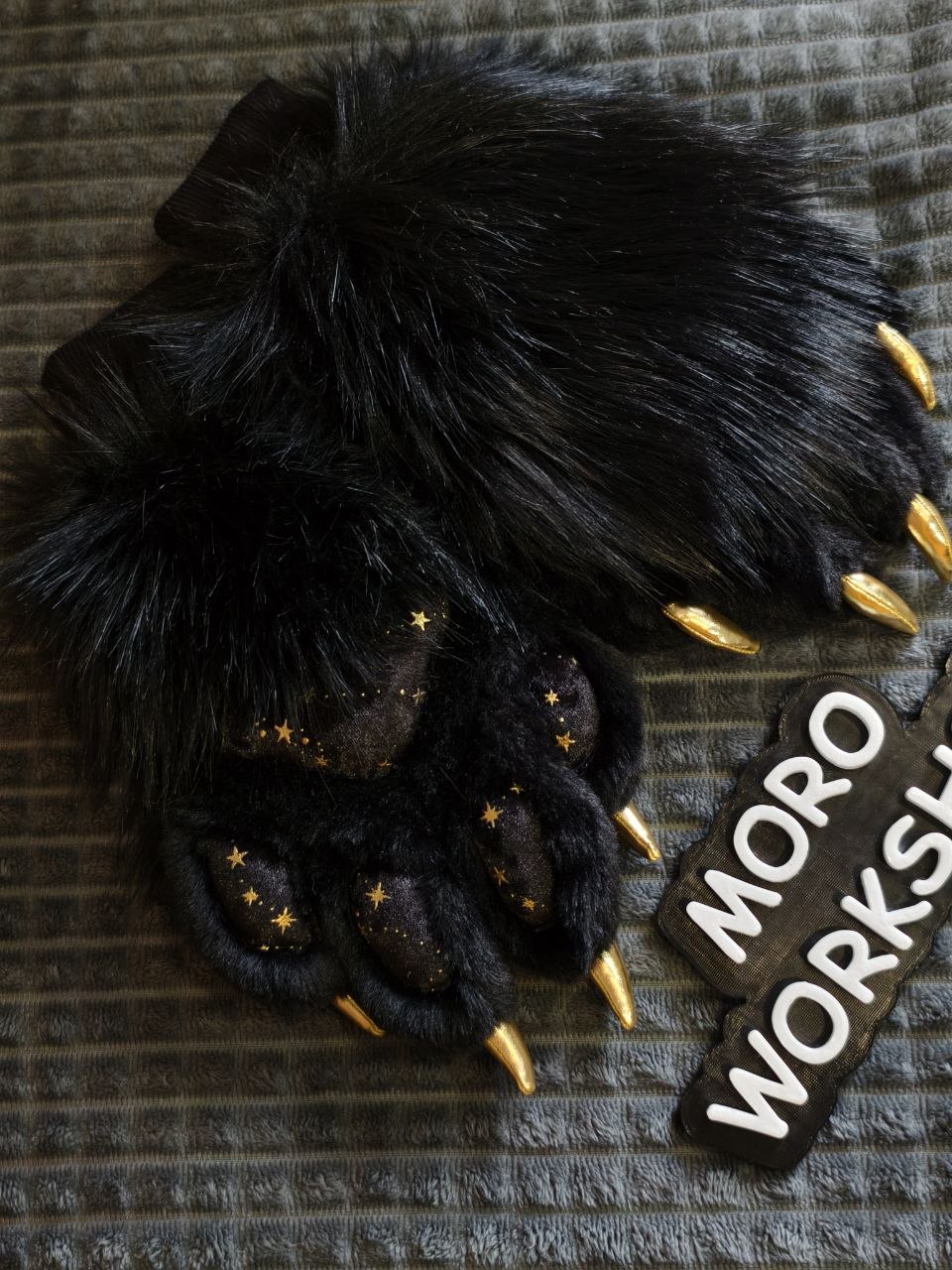
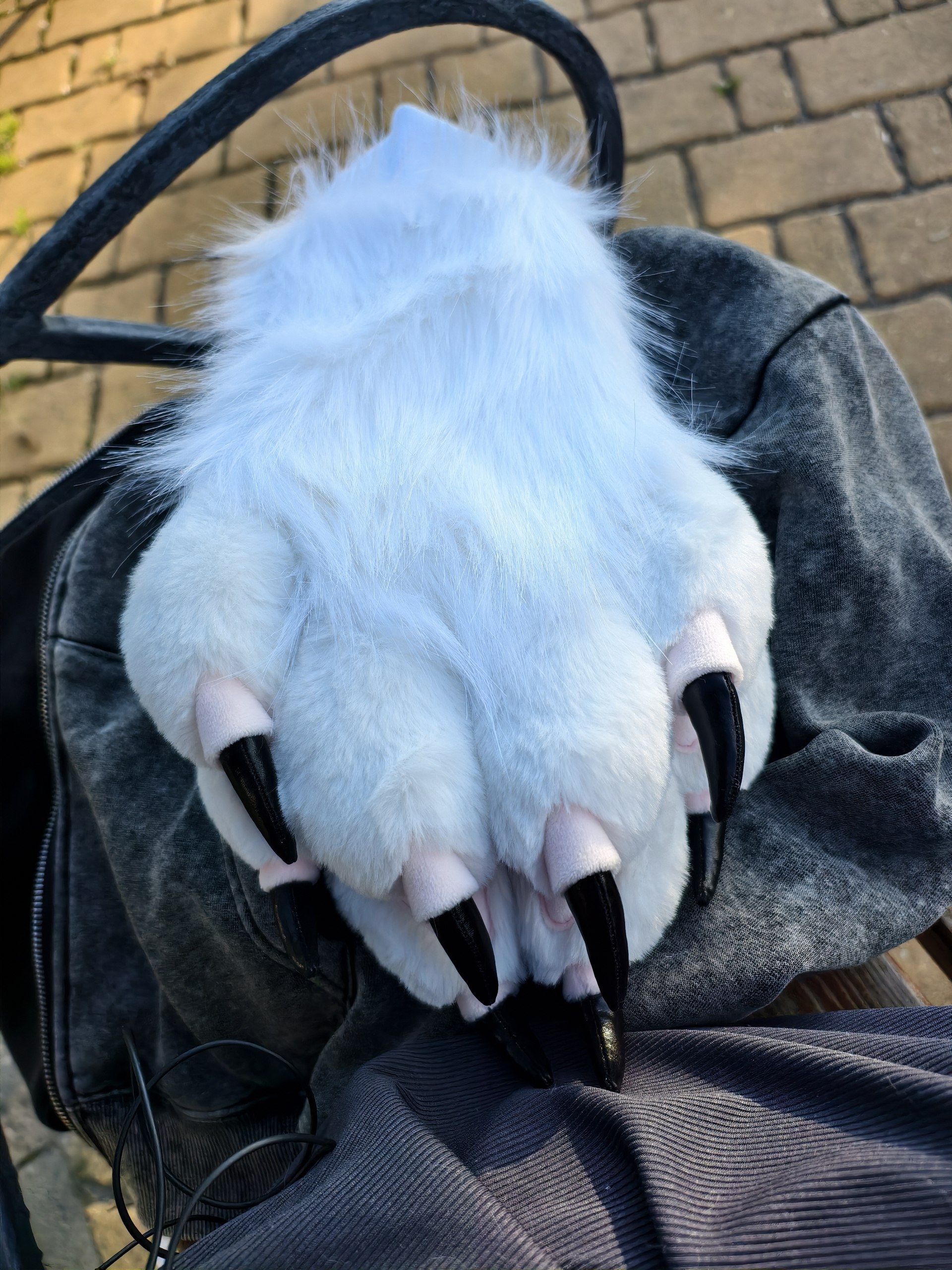
Types of paws
Simple glove-based paws
Thin, stretchy gloves are covered with fur. The simplest version is a four-fingered paw made from a pattern; it is recommended to make these after sewing the tail, as the process involves working with fur in a way you will already be familiar with.
Pros: mobility, lightness, ease of construction.
Cons: fingers look thin, and the "animal" shape is not very pronounced.
Foam-padded paws
This is the most "authentic" option: thick layers of foam are glued onto thin gloves; cylinders are formed for the fingers and adjusted through fitting. Professionals often glue a thick layer of foam to the hand, shape its contours, and then cover it with a layer of fleece. The fur on the fingers is trimmed beforehand to a length of about 1/2 inch.
Pros: voluminous, expressive "paw-like" appearance; looks great in photos.
Cons: labor-intensive, reduced mobility, runs hotter.
"Piano paws"
An approach using stretchy gloves and long "shaggy" fur: fur with a pile length of about 1 inch is used for the fingers, while fur with a pile of about 2 inches is used for the rest of the paw. A good choice if finger mobility is required.
What are paws made of?
- Base: thin gloves (knit or spandex) or a fabric pattern.
- Padding: high-density foam shaped to the desired form, or poly-fill for a more "plush" look. Upholstery foam yields a more defined shape.
- Fur: short- or medium-pile, to prevent the fingers from looking bulky. See the article "Fursuit Fur" for details.
- Pads: made of minky, fleece, or vinyl; sewn or glued onto the palm and fingers.
- Claws: felt, plastic, or silicone — optional.
How to make paws (general procedure)
- Trace your hand on paper and draw fingers of the desired length and thickness to create a pattern. You can also trace the outline of a glove.
- Cut the fur following the direction of the pile and sew the pieces together—the fur on the paw should run from the wrist toward the fingertips.
- Prepare the padding: cut foam for the fingers, round the edges, and fit them to your hand. Alternatively, use poly-fill for a softer look.
- Assemble the paw: apply the padding to the glove, stretch the fur over it, and secure it with stitching or glue.
- Make the paw pads and glue them in place.
- Check the fit and mobility—ensure you can hold objects and type.
- Trim the fur on the fingers and neaten the edges.
You can find the general sewing and cutting layout in the guide "How to Make a Fursuit", and details on patterns in the article "Fursuit Patterns".
How to choose focus mitts when ordering
- Dexterity. Consider what you’ll be doing with your hands; if you need to hold objects, it’s best to avoid making the fingers too thick.
- Size. Paws are made to fit your specific hand measurements; an uncomfortable fit causes chafing and hinders movement.
- Warmth. Hands sweat, so the paw material and lining are crucial for comfort.
- Wear and tear. The paw pads and finger seams are the first parts to wear out; find out how to repair them.
- Style. The paws should match the style of the head—whether cartoon, realistic, or kemono. Kemono suits, for instance, often feature human-like hands rather than traditional "paws."
Common mistakes
- Foam is too thick — hands won't bend.
- Fur against the grain — the paw looks ridiculous.
- No paw pads, or they are poorly glued on.
- No lining: hands sweat, and the glove slips.
- Not trying it on during construction. Finger shapes need to be fitted while on the hand.
Questions and Answers
Can I use a phone while wearing the paws? It depends on the design. Slim paws and gloves with touchscreen-compatible fingertips are more convenient, whereas thick, foam-padded ones are awkward to use.
What are the paws stuffed with? Foam is used if a defined shape is required, while poly-fill (synthetic down) is used for a soft, "plush" look.
How long does production take? Anything from a few days to several weeks, depending on the design and the maker's experience.
Can I order just the paws? Yes, many makers accept orders for paws separately. You can find more details on the process in the ordering guide. Prices are listed here, and examples of work can be found in the portfolio.
Want a custom fursuit?
Tell us about your character — we will assess the project and name the timeline and price.