
Fursuit Base: Types, Material Comparison, and How to Choose
What a fursuit head base is; the differences between foam, plastic, 3D printing, and papier-mâché; and how to choose the right material for your project and avoid making a mistake when buying.
- #DIY materials
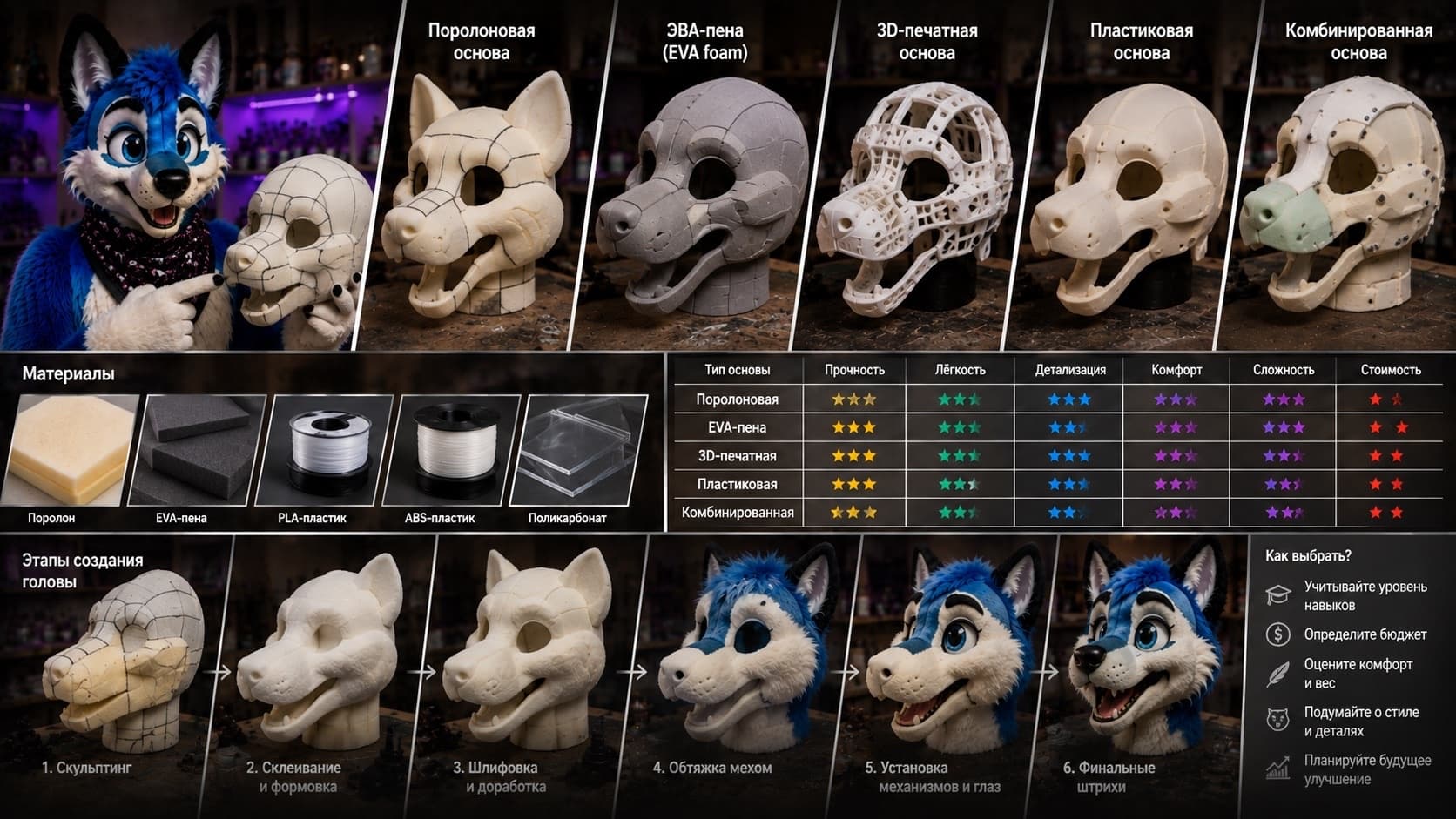
What is a fursuit base?
The base (or "blank") is the structural framework of the head that sits beneath the fur. It determines the shape of the muzzle, the weight, and the durability, as well as the functionality of the eyes, jaw, and ventilation system. While fur and details can be reworked, a flawed base is difficult to fix, so choosing the right one requires special care.
A base is essential whether you are a professional maker or someone building a fursuit yourself (learn more about the process in our "How to Make a Fursuit" guide). Many people purchase ready-made blanks—especially for popular styles like Kemono and Protogens (read more).
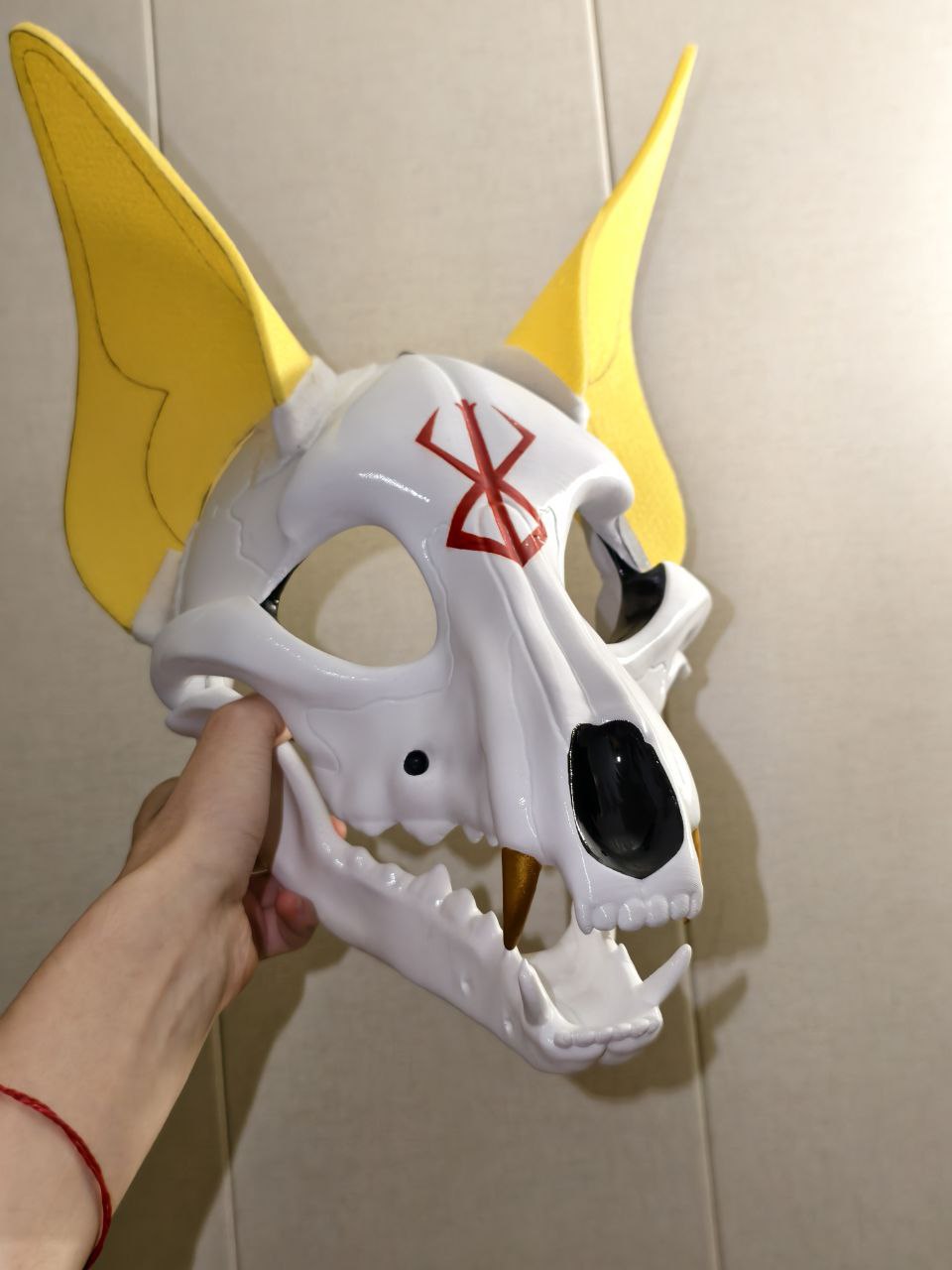
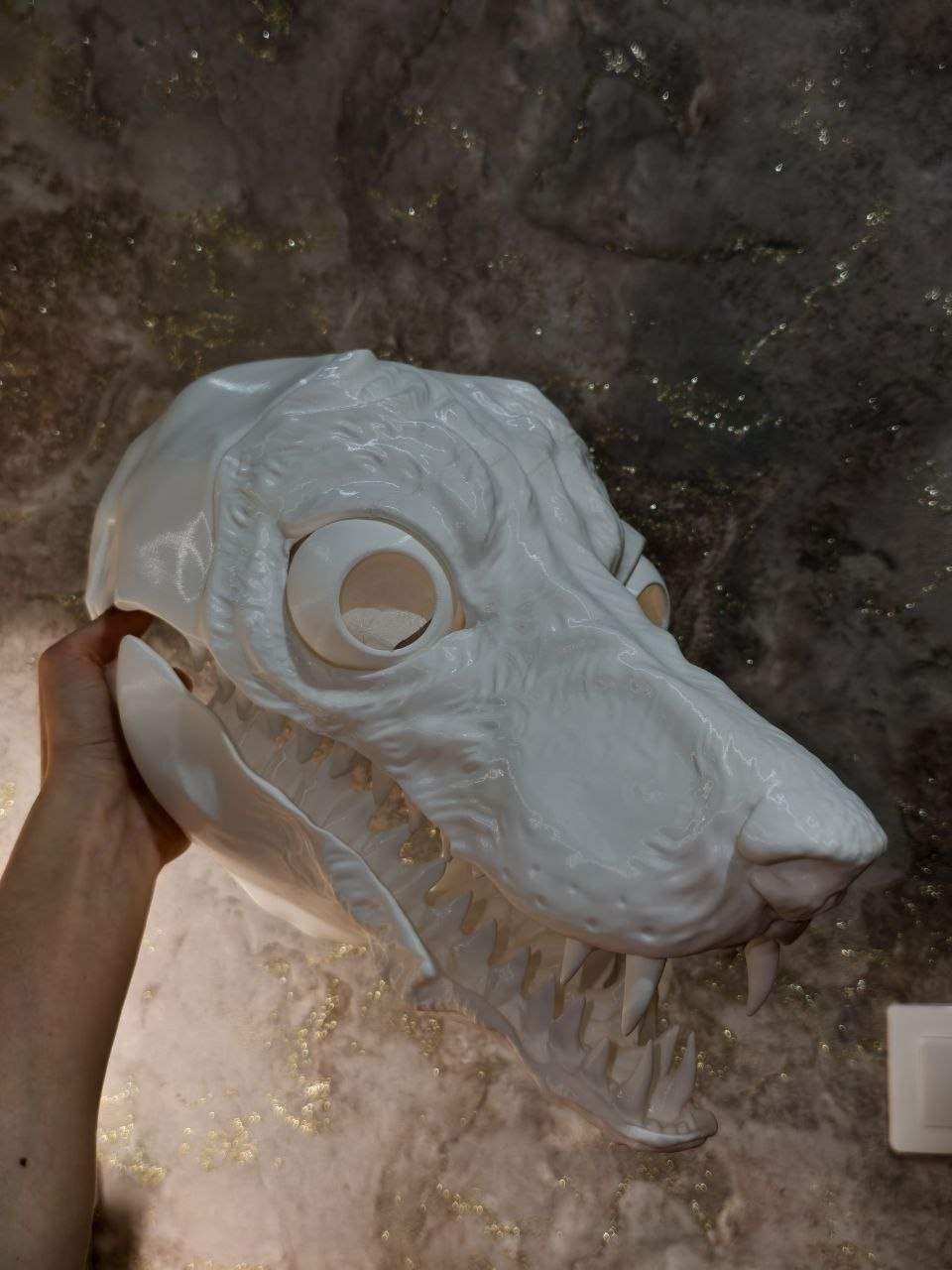
What types of bases are there?
Foam (Polyurethane Foam)
The most common choice in workshops.
Pros: Lightweight and flexible; the shape can be adjusted using a knife or scissors; it holds fur well when glued correctly. The foam doesn't crack like rigid prints and easily withstands impacts and compression—making it valued for its durability during wear.
Cons: Designs often need to be simplified—capturing fine facial anatomy in foam is difficult; creating the head is labor-intensive and slow; it struggles to hold sharp, crisp lines; and cutting symmetrically requires experience.
Suitable for: Most heads, especially those in cartoon or semi-realistic styles.
Plastic
Thermoformed (vacuum-formed) or cast. The shape is created using a mold, resulting in a consistent, neat finish.
Pros: Durability, consistency (repeatability), and crisp lines.
Cons: Heavier and more rigid; requires a mold; the finished base is harder to modify.
Suitable for: Mass-produced heads and complex shapes.
3D Printing
The base is designed in 3D software and printed. While there is more to say about models in a separate article, the key takeaway for now is that a 3D-printed base provides a precise, symmetrical shape and allows for the inclusion of fine facial details that are difficult to replicate in foam.
Pros: Precision and detail; the ability to incorporate openings for eyes, ventilation, and jaw attachments.
Cons:
- Brittleness. Rigid plastics (PLA, PETG) and photopolymer resins can crack upon impact or if dropped. To make a rigid base virtually indestructible, you need thick walls, which adds weight.
- Weight: Increases with wall thickness.
- Requires sanding and surface preparation; dimensions are limited by the printer, so heads are often printed in sections and glued together.
Flexible option — TPU. This is an elastic plastic: it is softer than rigid materials, withstands impacts better, and doesn't shatter, yet it is firmer than foam. If you need print precision and drop resistance, consider TPU.
In short: 3D printing wins on detail, while foam wins on lightness and damage resistance.
Best for: complex structures, repeatable designs, and heads containing electronics.
Papier-mâché and paper
The base is formed from layers of paper and glue over a framework.
Pros: affordable materials, beginner-friendly, can be made at home.
Cons: fragile, moisture-sensitive, heavy if the layer is thick, long drying time.
Best for: initial projects and experiments, rather than heavy use.
Cardboard and other makeshift materials
A quick, cheap option for testing an idea or creating a one-time costume. Not suitable for regular wear: low durability; handles moisture and sweat poorly.
Comparison
| Material | Weight | Strength | Shape Accuracy | Barrier to Entry |
|---|---|---|---|---|
| Foam | Lightweight | Moderate | Depends on skill | Moderate |
| Plastic | Medium to heavy | High | High | High |
| 3D printing | Medium (depends on wall thickness) | High | Very high | Moderate to high |
| Papier-mâché | Medium | Low | Low to moderate | Low |
| Cardboard | Lightweight | Very low | Low | Very low |
How to choose a base
- Determine the head style. Whether it is cartoonish or realistic, with a moving jaw or without, the choice of material depends on this (fursuit types and styles).
- Consider the weight. The head needs to feel comfortable on your neck and shoulders during hours of wear.
- Plan for ventilation and visibility. The base must allow for air vents and the mounting of fans.
- Factor in your experience level. Beginners find it easier to work with foam or a pre-made base; papier-mâché is a good option for experimenting.
- Decide on future modifications. If you plan to alter the shape, choose a flexible material.
- Check your budget. Remember: the base represents only a small fraction of the total cost, yet the quality of the entire suit depends on it.
What to look for when buying a ready-made base
- Symmetry and surface quality. Misalignments and irregularities will show through the fur later.
- Weight. If possible, ask the seller for this information.
- Placement of eyes and vision openings. Check if the positioning aligns with your facial proportions.
- Size. Ensure the head fits your head circumference and leaves enough room for padding.
- Compatibility with mechanics and ventilation.
- Seller's reputation. Look for customer reviews and examples of finished heads built on that base.
- Part format and compatibility (jaw, eyes, ears): some components may be sold separately.
Be cautious with "bargain" listings on marketplaces: compare photos and don't forget to verify the material and weight.
How a base is transformed into a head
Stages in general:
- Checking and preparing the base - adjusting, sanding, securing parts.
- Creating a pattern according to the shape of the base, often using film and tape.
- Cut and sew the fur according to the pattern.
- Covering the base with fur - for glue and seams.
- Details: eyes, nose, teeth, tongue, ears.
- Coloring and cutting of fur, final finishing.
If you want to delegate this step to a professional, take a look at work process and portfolio.
Questions and Answers
Which base is best for a first project? For a beginner, foam or a ready-made blank is ideal. Papier-mâché is fine for experimentation but not suitable for regular wear.
Can I print the base at home? Yes, provided you have a printer large enough or print the head in sections. Some finishing work will be required, such as sanding, priming, and assembling the parts.
Does the base affect the price of the fursuit? Yes: the cost of the base—including materials and the labor involved—is factored into the total price. You can find more details in the article "How Much Does a Fursuit Cost?".
Do you need a turnkey cylinder head?
If you don’t want to deal with the materials yourself, submit a request, and we’ll create the headpiece based on your reference. We’ll select the base and assemble the costume from start to finish.
Want a custom fursuit?
Tell us about your character — we will assess the project and name the timeline and price.