
raptor-fursuit
Raptor fursuit: raptor mask, base and how to turn it into a suit
- #species
- #raptor
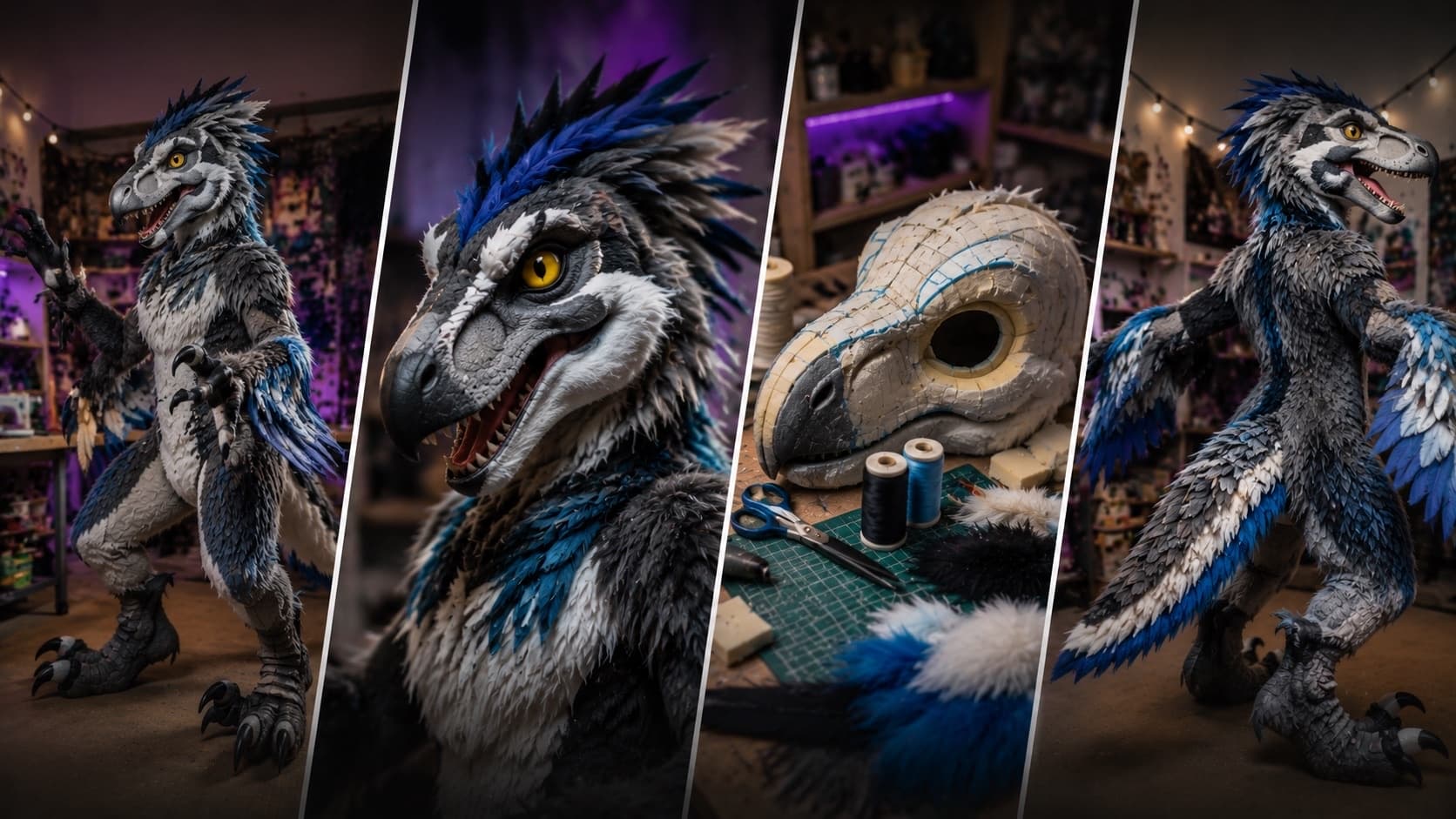
A raptor in the fursuit world
A raptor fursuit is a costume depicting a dinosaur character (such as a dromaeosaur or a similar species), featuring an elongated, toothed snout, distinctive ears or feathers, and a tail. Search queries like "raptor fursuit" and "raptor mask" often appear together because many people create these costumes using a mask—either a ready-made one or a 3D-printed version.
Where the "raptor mask" comes from
There are two approaches:
- A ready-made mask or base. This could be a plastic or 3D-printed head. You can find ready-made raptor bases—including paintable ones and sometimes models with movable jaws—in stores or from independent makers.
- A DIY base. These are made from foam or 3D-printed. Templates exist for popular dinosaurs—such as kits for raptors, T-Rexes, and Therizinosaurus—that include ready-made options for ears, feathers, horns, tails, and paws. You can find more details on materials in the article “Fursuit Base”.
There are also tutorials on how to turn a simple dinosaur mask into a fursuit. This saves time, though the final result depends on the quality of the base you start with.
How to turn a mask into a fursuit: general procedure
- Test the mask on yourself. Check if it is comfortable to put on and see out of, and ensure it doesn't press uncomfortably against your face. Make sure the fit around your head is correct.
- Assess ventilation. Enclosed masks often restrict airflow; consider adding air holes or a fan.
- Prepare the surface: sand it, apply primer, and refine the shape if necessary.
- Create patterns based on the base—such as a tape cast, as described in the article "Fursuit Patterns".
- Cover with fur or feathers. Raptor suits often feature fur on the head and feathers on the ears and tail; choose your fur using the guide "Fursuit Fur".
- Add details: eyes, teeth, tongue, and nose. For the eyes, you can use ready-made inserts and mesh—see the article "Fursuit Eyes" for details.
- Add the tail and paws (tail, paws).
You can find the general construction process in the guide "How to Make a Fursuit".
What to look out for
- Weight Printed and plastic bases are heavier than foam and may be fragile.
- Overview. The elongated muzzle and eyes on the sides of the head sometimes limit the field of vision.
- Jaw. A long mouth with teeth looks good with a movable jaw, but it needs to be thought out in advance (more).
- Comfort. A closed head requires ventilation.
- Base quality. Check symmetry and surface quality before purchasing.
Buy a ready-made one, order one, or make it yourself.
- Buy a ready-made suit or head. Faster, but the design isn't yours. Check the quality via photos and reviews.
- Order from a maker. A good option if you want a custom design. See the process in the instructions.
- Make it yourself — using a pre-made base saves time, though you still have to handle the sewing, eyes, and finishing touches.
Find prices and formats in the Pricing section, and view examples of work in the portfolio.
Questions and Answers
Can you make a fursuit out of a standard raptor mask? Yes, such conversions are common, but the result depends on the mask's quality; factors like weight, fit, and ventilation often require modification.
Which base is best for a raptor? It depends on your goals: foam is lightweight, while 3D-printed bases offer precision and detail but are heavier and more fragile.
Is a raptor a good choice for a beginner? Yes, especially if using a ready-made base, though it is best to start with a simple project (where to begin).
Want a custom fursuit?
Tell us about your character — we will assess the project and name the timeline and price.