
Choosing an Animal for a Fursuit: How the Species Affects Design, Complexity, and Comfort
How to choose an animal or species for a fursuit: dogs, wolves, cats, foxes, dragons, and others. How the muzzle, ears, tail, and markings affect the design, cost, and comfort.
- #types
- #for beginners
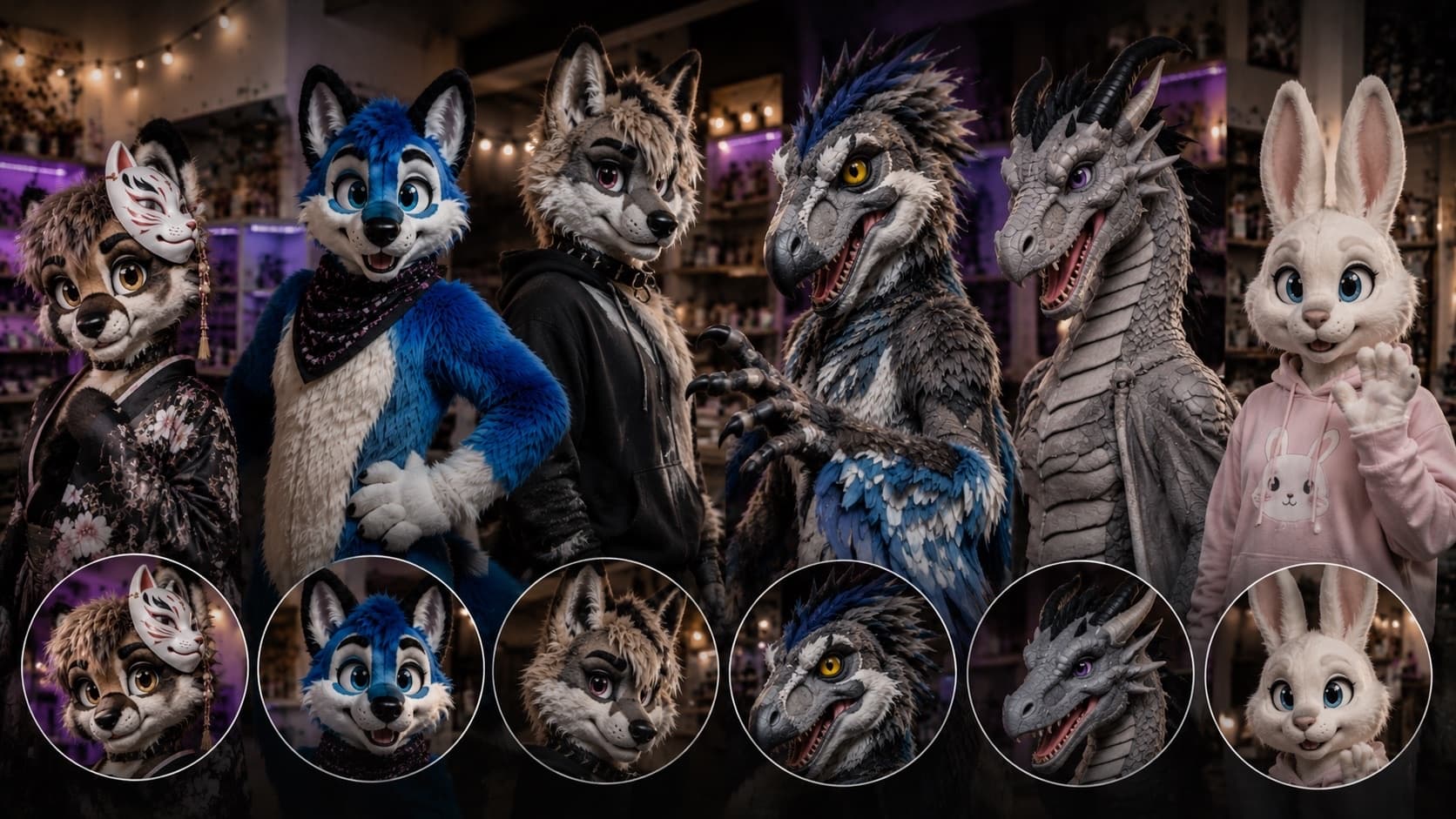
Form determines design.
Choosing an animal is not just a matter of taste. The species determines the shape of the muzzle, ears, tail, coloring, and field of view—and consequently, the complexity of the work, the weight, and the cost. Moreover, every character has unique features, so there are no universal rules. Below are some general guidelines.
Most popular types
According to encyclopedic sources, dogs, wolves, and big cats are the most common types of fursuits; there are also fantastical hybrids. Within these groups, there is a wide variety of options:
- Dogs (collies, huskies, sighthounds, retrievers, dachshunds, etc.).
- Wolves and other canines (foxes, coyotes).
- Cats (domestic cats, lynxes, tigers, lions, snow leopards).
- Dragons and fantastical creatures.
- Birds, reptiles, marine life, and others.
How the view affects the design
| Feature | Impact |
|---|---|
| Muzzle length | A long muzzle (wolves, foxes, dogs) requires a well-planned base, ventilation, and visibility; a short one (cats) is easier to make and more comfortable |
| Ears | Upright ears (wolf, fox) need a framework; floppy ears (some dogs) are softer and simpler but heavier (more on ears) |
| Tail | Long, fluffy tails (fox, wolf) are heavier and require a mounting system (tail) |
| Coloring | Complex patterns (tigers, leopards, huskies) add to the workload (fur) |
| Horns, wings, spikes | Dragons and fantasy species require additional structural elements and are usually more expensive |
| Mouth and teeth | For predators, the teeth and jaw require careful planning (jaw) |
How to choose
- Consider the personality. The species is part of the character's image: a wolf is associated with strength, a fox with cunning, and a cat with grace. However, your character can break these stereotypes.
- Assess the complexity. Simpler shapes and color patterns are better suited for a first suit (where to start).
- Think about comfort. A long muzzle and a heavy tail make the suit less comfortable to wear.
- Decide on a style. The same species looks different depending on whether it is rendered in a cartoon, realistic, or kemono style.
- Check the maker's portfolio. See if they have experience working with your chosen species.
- Consider your budget. Complex species and designs cost more (why).
Unusual and fantastic views
Mistakes when making a choice
- Choosing based on a picture without considering the structure: a 2D drawing doesn't always translate well into a 3D form.
- Ignoring comfort: a beautiful, long muzzle might make breathing difficult.
- A design that is too complex for a first suit.
- Copying someone else's design without adapting it to your own proportions.
How to order
Prepare your reference material: front, side, and back views, along with colors and markings (how to prepare). Check out the portfolio, review the pricing, and submit a request—we’ll advise you on the best way to bring your chosen design to life.
Questions and Answers
Which animal is the easiest to make? Generally, species with short muzzles and simple coloring—such as cartoon-style cats—are the easiest. However, a lot depends on the style.
Does the species affect the price? Yes: complex coloring, large details, and non-standard construction features increase the cost.
Can I choose a non-existent animal? Yes, many people choose hybrids or fantasy creatures; it is important to discuss the design and construction beforehand.
Which type is suitable for hot weather? Any design that doesn't involve a fully enclosed body and offers good ventilation; the choice depends on the format and materials rather than the specific animal species.
Want a custom fursuit?
Tell us about your character — we will assess the project and name the timeline and price.