
How to put on a fursuit without overheating: the process, a handler, and cooling methods.
How to properly put on a fursuit, what to wear underneath, how to work with a handler, and how to avoid overheating: breaks, fans, cooling vests, and signs of dangerous conditions.
- #for beginners
- #safety
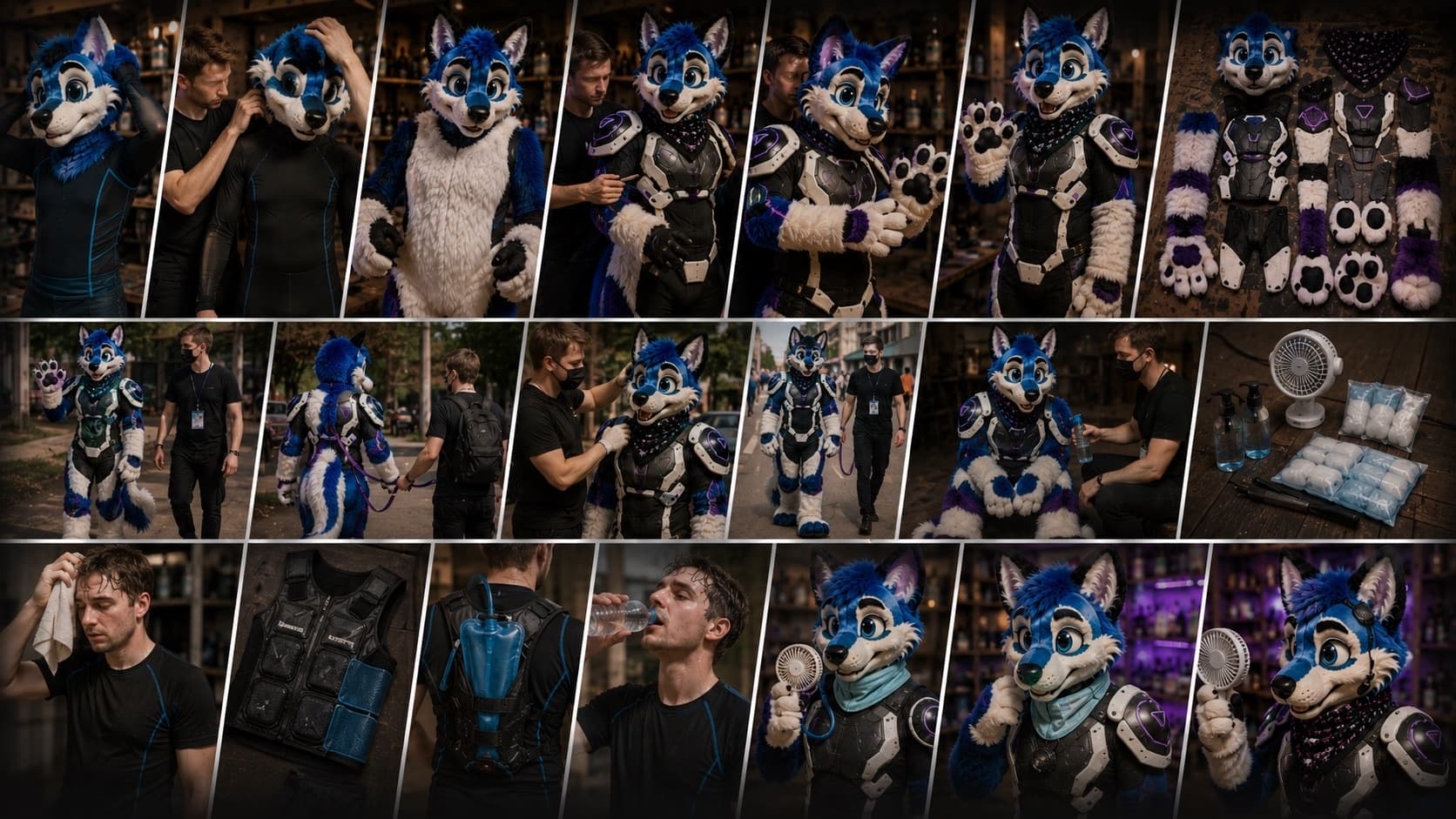
Why this is important
A fursuit covers the entire body and head; it is warm and heavy, and it restricts visibility. Putting it on incorrectly or failing to take breaks quickly leads to fatigue and overheating. Below are some practical guidelines.
Donning procedure
The exact order depends on the format (types of fursuits) and construction, but the general logic is as follows:
- Base layer. Put on form-fitting, moisture-wicking clothing.
- Body and legs. If you have a fullsuit or partial, put on the bodysuit or leg padding, followed by the fursuit feet.
- Tail. Attach it to your belt while the body section is still loose.
- Hand paws. Put these on after the body (hand paws).
- Head — last. Make sure it sits straight and that you have good visibility.
If you are putting on a new suit for the first time, take your time and have a helper assist you.
What to wear under a fursuit
- Moisture-wicking clothing. Form-fitting undergarments made of quick-drying fabric—such as compression gear—wick away sweat and improve airflow.
- Lightweight layer. Avoid heavy garments, as they trap heat.
- Socks and paw pads — to prevent sweating and slipping.
A handler is your assistant.
A handler is a trusted person who looks after you while you are wearing the suit and provides assistance. Community recommendations include:
- always go out with a handler—just in case something goes wrong;
- agree on a signal that means "I need a break";
- it is best if the handler is not in a suit: this gives them an unobstructed view so they can help effectively;
- they monitor your hydration, prevent you from bumping into things, protect you from rough play, and help you interact with others.
How to avoid overheating
Overheating is the most common risk for a fursuiter.
- Breaks. In hot or humid weather, it is recommended to take a break at least every 45 minutes: remove the head, drink water, and move to a cool area. In demanding conditions, limit time in the suit to 15–30 minute intervals.
- Short initial sessions. Keep your first few outings brief and monitor how you feel.
- Fans. They work best when placed inside the muzzle (directed at your face) and at the top of the head, as warm air rises. It is best to integrate ventilation when building the base structure (see how it's done here).
- Cooling vests. Gel vests typically stay cool for 30 to 60 minutes; ice-pack vests last longer—up to several hours—but should not be worn directly against the skin, as this can cause cold burns.
- Water and electrolytes. Drink before, during, and after.
Signs it's time to stop
Stop and move to a cool place if you experience dizziness, severe weakness, nausea, a rapid heartbeat, or confusion. Do not wait until your condition worsens significantly; notify the handler as soon as the first signs appear.
Overview and Safety
- Limited visibility. Move more slowly than you would without the suit, and watch out for steps and curbs.
- Movable jaw and electronics add weight and make it harder to see (jaw).
- Crowds. In crowded areas, stay close to your handler and don't hesitate to ask for help.
Common mistakes
- Putting on the head before the body is ready.
- Not bringing water along.
- Wearing the suit without breaks in hot weather.
- Walking without a handler.
- Ignoring early signs of overheating.
If you need help choosing the format and ventilation, submit a request — we will take these factors into account when creating the suit. You can find more details about the ordering process in the instructions.
Questions and Answers
What should I wear under a fursuit? Form-fitting, moisture-wicking clothing, such as compression wear.
Do I need a handler? It is highly recommended: it ensures safety and convenience. Agree on a signal for taking a break.
How often should I take breaks? In hot weather, at least every 45 minutes; in demanding conditions, take breaks more frequently—every 15–30 minutes.
Do cooling vests help? Yes, but different models work differently: gel-based vests last a short time, while those using ice packs last longer.
Want a custom fursuit?
Tell us about your character — we will assess the project and name the timeline and price.