
Digi-legs for fursuits: how they work, how they differ from standard ones, and whether they are worth making.
What are digitigrade legs in a fursuit, and what are they made of—foam padding or stilts? Pros, cons, walking comfort, and heat buildup.
- #mechanics
- #legs
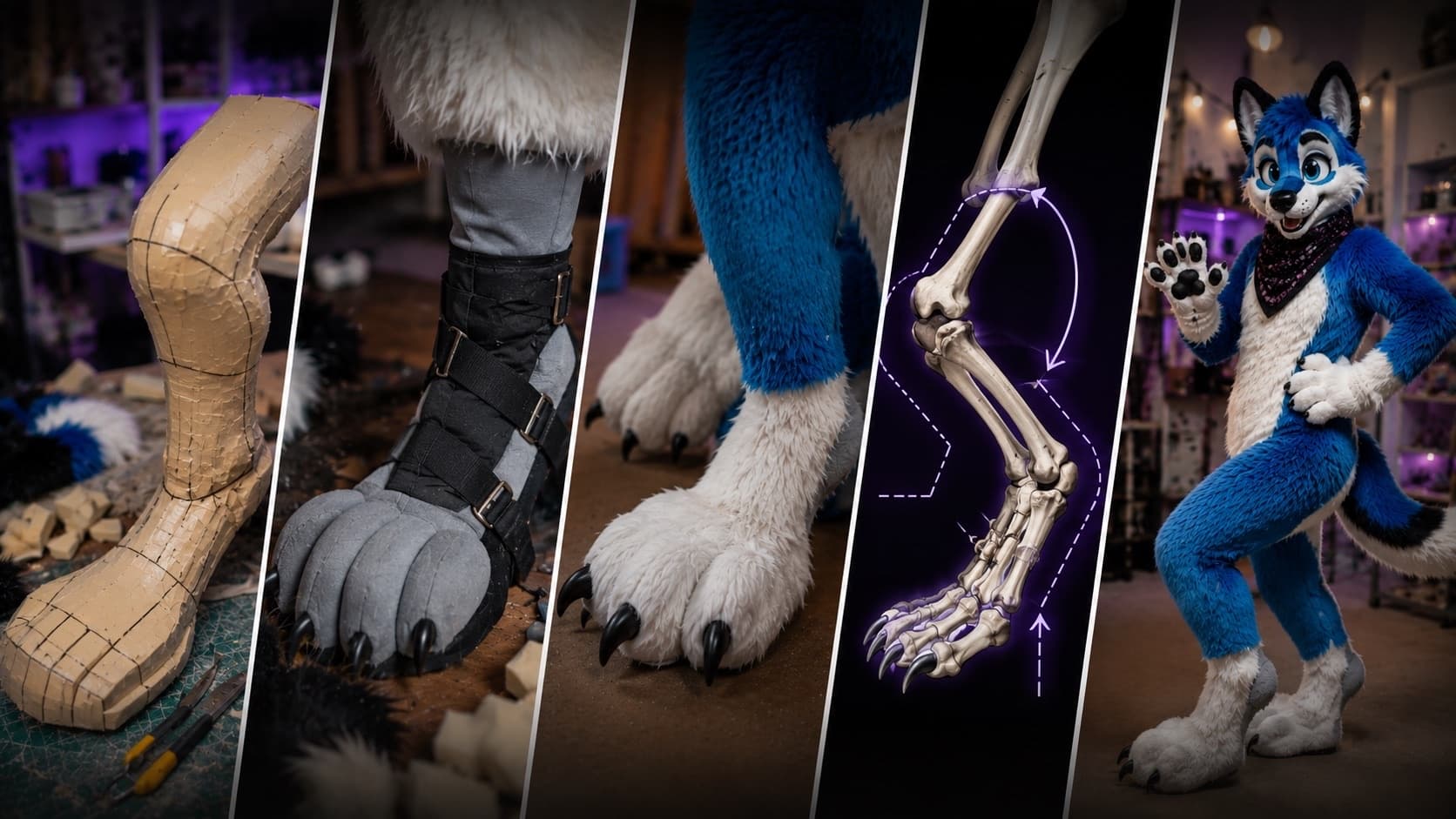
Plantigrade and digi
Fursuits feature two types of leg styles:
- Plantigrade — the legs mimic the human foot and sole; this is the simplest option.
- Digitigrade — an imitation of an animal stance: a raised heel and a reverse knee bend, similar to that of dogs, cats, and many predators.
The digitigrade style looks more impressive but is more difficult to both construct and wear. Suit types are detailed in the article “Types of Fursuits”.
How digitigrade legs are made
Lightweight foam pads are attached around the legs to mimic the shape of an animal's limb. The maker carves out the rough forms of muscles and bones, then refines them into an anatomically accurate shape. Modern techniques employ layers of varying densities: soft foam on the outside and firmer foam closer to the leg.
Pros: allows for control over "illusory" joints and achieves a more realistic shape.
Cons: more material on the legs means it gets hotter; the construction is more expensive and difficult to make.
2. Stilts
Stilts create the effect of an animal leg: you walk on a specialized structure. You don't need to add bulk to your legs, but:
- your actual joints are used, making it difficult to adjust the "illusory" joint—proportions may end up looking unrealistic;
- walking is more difficult and requires practice.
What You Need to Know About Wearing It
- Gait changes. Many people naturally shorten their stride; over time, a characteristic rhythm develops: knees are lifted higher, and turns become wider.
- Heat. The padding retains heat longer than standard clothing, even with a breathable lining. "Digi-style" legs, in particular, noticeably increase heat buildup in warm weather.
- Weight and fatigue. Bulky padding adds weight to the legs.
- Footwear. "Foot paws" must match the shape of the legs; this needs to be coordinated when placing an order.
Patterns for legs
Special patterns that account for padding and the leg's range of motion are used for digitigrade suits. Plantigrade patterns are simpler. You can find more details on the method in the article "Fursuit Patterns": the leg and padding shapes can be captured using the "duct tape dummy" technique.
Is it worth getting a Digi?
Suitable if:
- the “animal” silhouette is important to you;
- are you ready for a higher price and heat;
- the suit is needed for photos and performances.
You can get by with a plant grade if:
- you choose a budget option;
- you will wear the suit for a long time and warmly;
- making your first suit (where to start).
Digi legs are an optional design, so they add cost; for more details, see the article “How much does a fursuit cost”.
What to discuss with the specialist
- Method: pads or stilts.
- Materials and weight.
- Thermal comfort.
- Compatibility with paw-boots.
- Putting them on and taking them off.
Order details are in the instructions; you can also submit a request.
Questions and Answers
What are digi-legs? Pads or a structure designed to mimic an animal leg with a raised heel.
How do they differ from stilts? These pads create an illusion on your leg and allow you to control its shape, whereas stilts alter your actual height and gait.
Do digi-legs get hot? Yes, hotter than plantigrade-style legs: the bulky padding retains more heat.
Can I make digi-legs myself? You can, but they are more complex to build than standard legs; first, master the basics using the guide "How to Make a Fursuit".
Want a custom fursuit?
Tell us about your character — we will assess the project and name the timeline and price.